


Why Non-Riding Horse Education is the Essential Foundation for Every Equestrian

What if the most transformative moments of your horsemanship journey happen while your feet are still firmly planted on the ground? Many people feel a quiet sense of overwhelm when they first stand beside a horse, wondering if they're athletic enough or if they'll ever understand the subtle language these animals speak. It's completely natural to feel a bit of anxiety about safety or the technical side of riding. You might even feel like you need to prove yourself in the saddle before you can truly call yourself an equestrian.
We believe the strongest bonds aren't built at a gallop, but through the quiet, intentional moments of non-riding horse education. When you prioritize learning about horse behavior and care first, you replace uncertainty with a deep, grounded confidence. This is where horses inspire learning, helping you build a foundation of trust before you ever pick up the reins. In this guide, we'll discover why learning from the ground up is the most critical step in your journey. We will explore how understanding body language and daily care creates a partnership where you feel prepared, safe, and deeply connected to these incredible animals.
Table of Contents
The Riding Myth: Why Horsemanship Starts Before You Ever Touch a Saddle
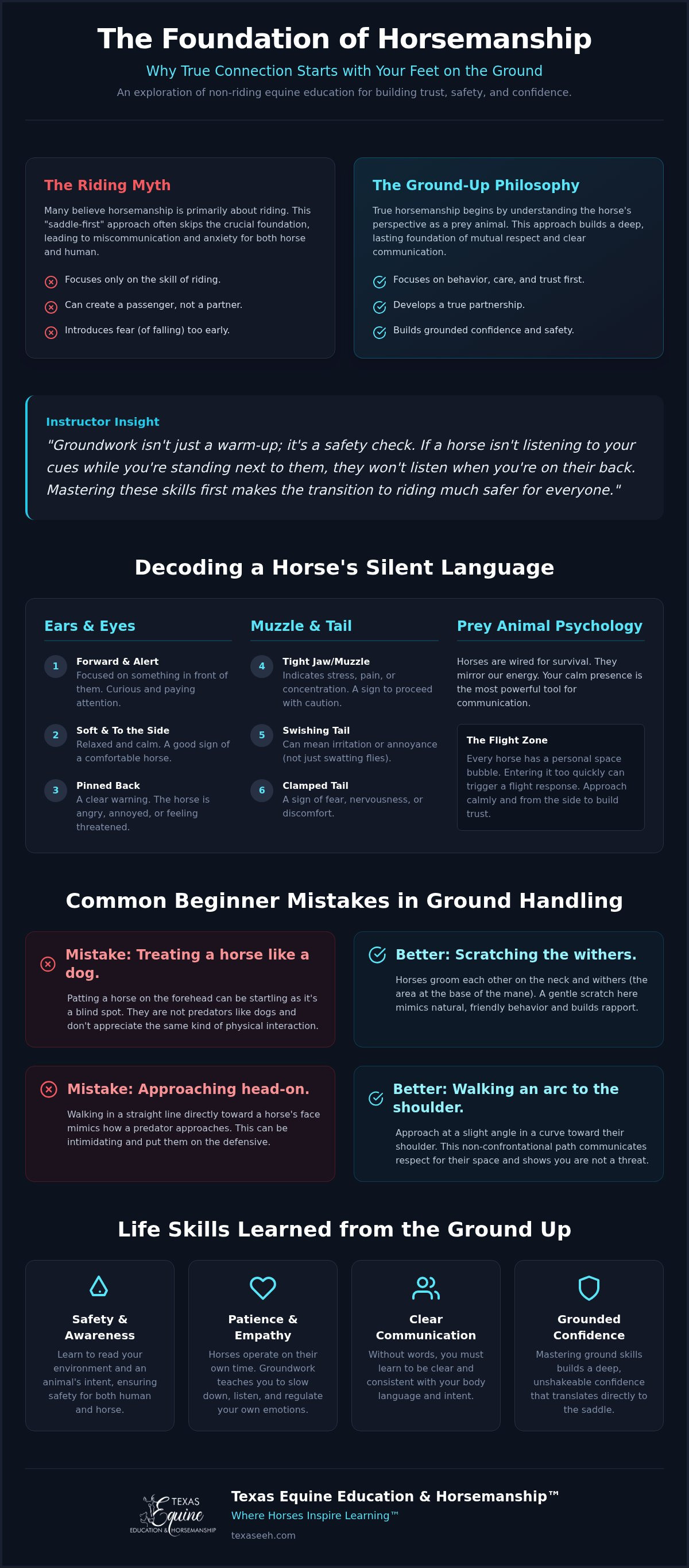
It's a common misconception that horsemanship only happens once you're in the stirrups. In reality, non-riding horse education is the heart of everything we do. It encompasses the study of equine behavior, health, and daily care. Horses are prey animals, which means their survival depends on being hyper-aware of their surroundings. They communicate through subtle shifts in weight, ear movements, and muscle tension. If we ignore these signals on the ground, we miss the foundation of the relationship.
Instructor Insight: Groundwork isn't just a warm-up; it's a safety check. If a horse isn't listening to your cues while you're standing next to them, they won't listen when you're on their back. Mastering these skills first makes the transition to riding much safer for everyone.
Understanding the 'Ground-Up' Philosophy
At Texas Equine Education & Horsemanship™, we believe in building confidence before adding height. Many beginners feel a natural barrier of anxiety when they think about falling. By staying on the ground, we remove that fear, allowing the student to focus entirely on the horse. This approach fosters empathy. You aren't just a passenger; you're a partner learning to respect a thousand-pound animal's personal space and needs. This philosophy is deeply rooted in Natural horsemanship, which prioritizes communication over physical force. Confidence comes first.
Horse Talk: Essential Vocabulary for Beginners
Understanding the language is the first step toward becoming a capable handler. Here are a few terms we use often:
Groundwork: Exercises done while leading or standing with the horse to establish trust and boundaries.
Equine Care: The daily responsibilities of health, nutrition, and grooming that keep a horse thriving.
Handling vs. Riding: Handling is how you interact with the horse on their level. Riding is a specialized skill that relies on the foundation established during handling.
Where Horses Inspire Learning™: Our core belief that horses teach us patience, clarity, and leadership through every interaction.
Deciphering Horse Behavior: The Science of Non-Riding Communication
Horses don't speak English, but they're incredibly expressive if you know what to look for. In non-riding horse education, we spend a significant amount of time observing the "micro-expressions" of the horse. A flick of an ear, a swishing tail, or a tightening of the jaw tells a story of their internal state. By understanding these cues, we honor Equine Welfare, ensuring the horse feels heard and respected. The core of this communication is "pressure and release." When we ask a horse to move, we apply a small amount of pressure, such as a gesture or a focused look. The moment they respond correctly, we release that pressure. This release is their reward. It tells them their choice was correct.
Safety Reminder: Every horse has a "flight zone," which is their personal space bubble. If you enter this zone too quickly or aggressively, a horse's natural instinct is to move away to stay safe. Understanding where this boundary lies from the ground keeps both you and the horse out of harm's way.
Texas Equine Tip: Don't walk directly toward a horse's nose. Predators move in straight lines. Instead, approach at a slight angle toward their shoulder. This non-confrontational path builds immediate trust and shows you aren't a threat.
The Psychology of the Prey Animal
Horses are wired for survival. Unlike dogs, which are predators, horses view the world as something to be cautious of. They're mirrors of our own energy. If you're frustrated or rushed, the horse will feel that tension and react with anxiety. Part of our non-riding horse education involves teaching students to regulate their own emotions. When you learn to breathe deeply and remain present, you'll see the horse's muscles relax in synchronization with your own.
Common Beginner Mistakes in Ground Handling
Treating a horse like a dog: Patting a horse firmly on the forehead can be startling. Most horses prefer a gentle scratch on the neck or withers where they naturally groom each other.
Ignoring subtle warnings: A horse might shift their weight or pin their ears long before they think about kicking. Learning to see these "whispers" prevents dangerous "shouts" later.
Inconsistency: If you allow a horse to walk into your personal space one day but not the next, they become confused. Clear, consistent boundaries are the kindest thing you can provide.
If you're ready to start listening to what your horse is saying, you can explore our horsemanship lessons to begin your ground-based learning journey.
Essential Groundwork Skills: Building Trust and Safety from the Ground Up
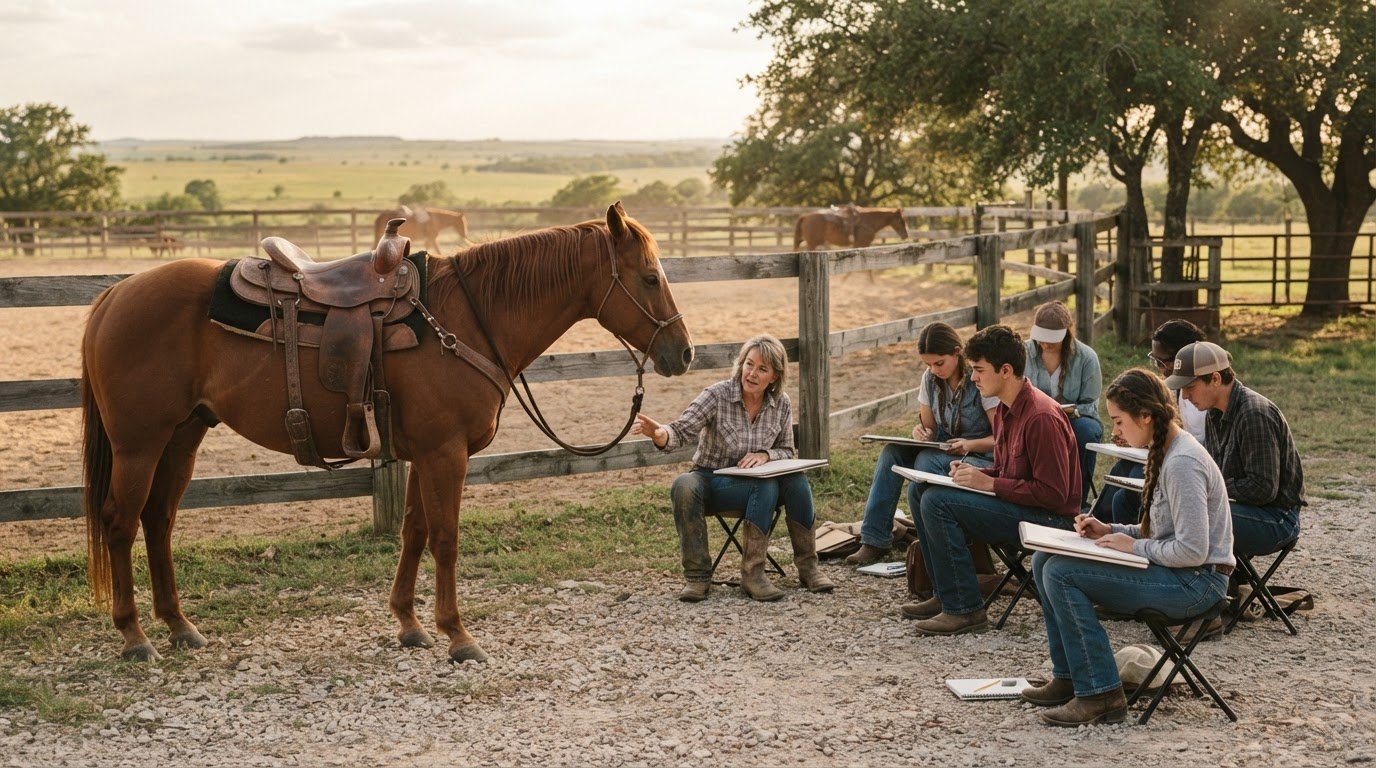
Mastering the physical aspects of horse handling is where theory meets practice. It's not just about staying busy at the barn. High-quality non-riding horse education prepares you to handle a horse with the same precision as a professional trainer. Before you ever think about mounting, there are five core skills you need to master: haltering, leading, grooming, hoof care, and basic first aid. These skills ensure that you're a capable partner rather than just a passenger.
Leading and Personal Space
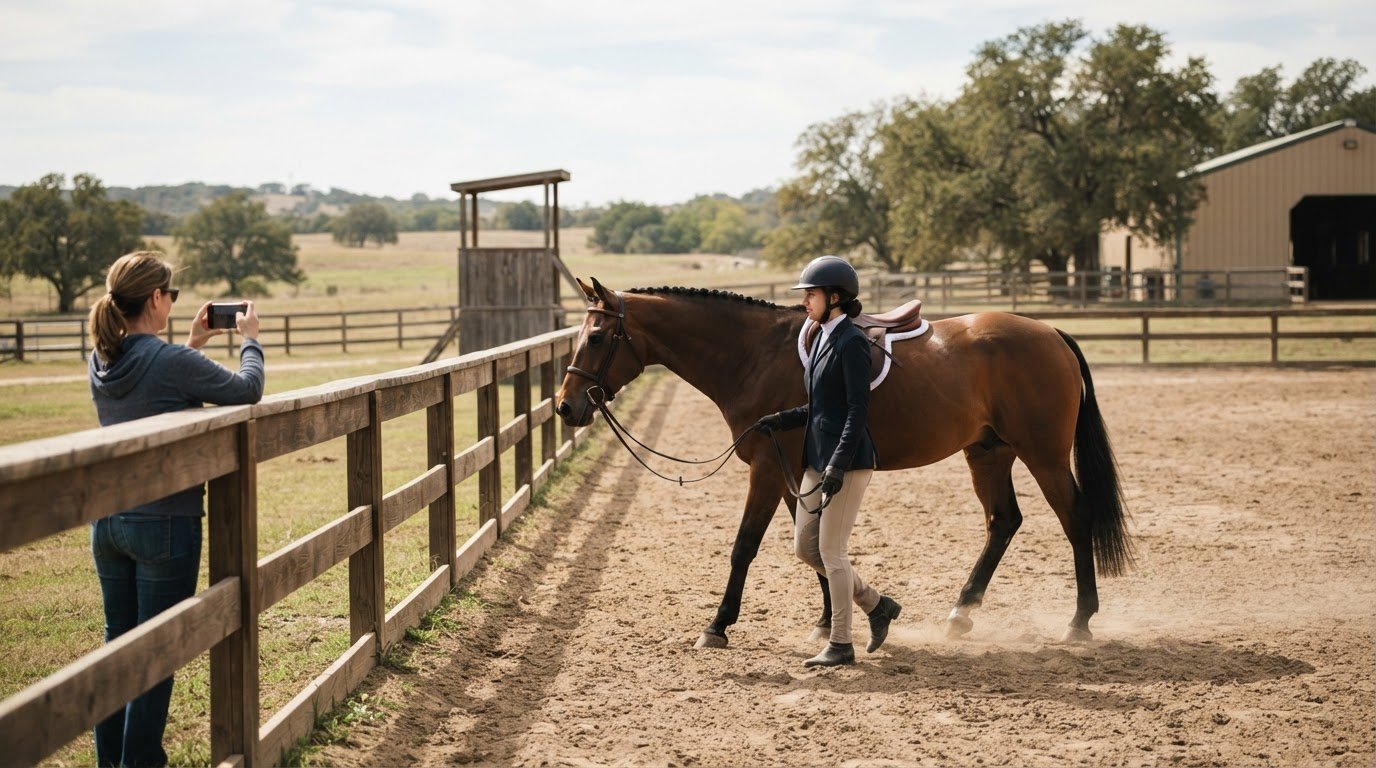
Leading is often the most overlooked skill, yet it's the most dangerous if done incorrectly. You must maintain your "bubble." If a horse crowds you, they aren't being cuddly; they're testing your leadership and spatial awareness. Your lead rope shouldn't be a leash used to pull the animal along. Instead, think of it as a communication tool. Clear, soft signals tell the horse where to go without creating unnecessary tension. You can find more details on these techniques in our resources for Safe Horse Handling.
Equine Care and Daily Management
Grooming serves a dual purpose. While it's a wonderful bonding ritual, it's also your primary health check. As you brush, you're feeling for heat, swelling, or new nicks. This is especially true for hoof care. Picking out feet daily prevents infections and allows you to spot issues before they become lameness problems. Understanding a horse's nutritional needs and how their diet affects their behavior is another critical piece of the puzzle.
Learning to spot safety hazards in a paddock, like loose wire or toxic weeds, is a hallmark of an educated equestrian. You can deepen your knowledge of these topics by joining our Equine Health and Care Classes. By focusing on these ground-based essentials, you build a foundation of safety that carries over into every other aspect of horsemanship. It's about being prepared for the unexpected and knowing how to respond with a calm, steady hand.
Continue your learning by exploring our horsemanship lessons to master these foundational skills alongside an experienced instructor.
Beyond the Arena: How Non-Riding Education Prepares You for Life and Career
The skills developed during ground-based learning extend far beyond the fence of a paddock. When you practice non-riding horse education, you're actually training yourself in leadership, patience, and the art of clear communication. Horses don't care about your job title or your athletic ability. They respond to your presence and your consistency. This makes them the perfect mentors for personal growth, helping you develop a calm, steady authority that translates into every area of your life.
Horses and Youth Development
For our youngest learners, the benefits are even more pronounced. Tiny Tot lessons focus on unmounted activities that refine fine motor skills and spatial awareness in a safe, nurturing environment. We also believe that curiosity about horses can be a powerful bridge to other areas of learning. Through The Reading Rein, we use horse-themed books and equine curiosity to encourage a lifelong love for literacy. It's a holistic approach where horses inspire learning both inside and outside the arena, building confidence in children before they ever face the challenge of height.
Career Readiness and Professional Certification
If you're looking toward a future in the equine world, you'll quickly find that top professionals spend about 90% of their time on the ground. Success in this industry isn't defined by how well you can jump or gallop; it's defined by how well you can manage the health, safety, and psychology of the animals in your care. For those ready to take their skills to a professional level, our Equine Industry Readiness Program™ offers structured 8-week segments that can even lead to college credit or career shifts. This program ensures you're prepared for the physical and mental demands of a professional stable.
This commitment to foundational knowledge is what we celebrate at the Horse & Rider Showcase™. While traditional shows often focus on performance in the saddle, we prioritize the partnership and progress made through unmounted horsemanship. Whether you're a parent watching your child grow in confidence or an aspiring professional building a resume, these ground-based milestones are the true markers of an equestrian's success. By investing in non-riding horse education, you aren't just preparing for a ride. You're preparing for a deeper connection with horses and a more capable version of yourself.
Taking the First Step Toward True Horsemanship
Building a relationship with a horse is a steady process that requires patience and a willingness to listen. We've explored how shifting the focus from the saddle to the ground creates a safer and more meaningful experience for both horse and human. By mastering body language and daily care, you move beyond being a passenger and become a true advocate for your equine partner. This commitment to non-riding horse education ensures you're prepared for every challenge, whether you're pursuing a professional path through our Equine Industry Readiness Program™ or simply looking for a deeper connection in the paddock.
Every moment spent grooming, leading, or observing is an investment in your shared future. These foundational steps don't just make you a better rider; they make you a more confident and empathetic person. If you're ready to see where your curiosity can lead, we're here to walk beside you. Continue your learning by exploring our Foundational Horsemanship Course. We look forward to helping you discover a world where horses inspire learning.
Frequently Asked Questions
What is non-riding horse education and who is it for?
Non-riding horse education is a comprehensive study of equine behavior, health, and handling that takes place on the ground. This approach is for anyone who wants to build a relationship with horses, including first-time owners, parents, and those seeking career readiness. It provides a low-pressure environment to gain confidence. By focusing on the "why" behind horse actions, students of all ages can develop a deep emotional connection before ever stepping into the stirrups.
Can I learn horsemanship without actually riding a horse?
Yes, you can master the core principles of horsemanship entirely from the ground. True horsemanship is about communication and mutual respect rather than just physical technique in the saddle. Through our non-riding horse education programs, you learn to read body language, manage daily care, and establish leadership. Many dedicated equestrians find that their most profound insights come from unmounted observation and intentional groundwork, which are the primary building blocks of the industry.
Is groundwork safer for children than traditional riding lessons?
Groundwork is often safer for beginners because it removes the height factor and the fear of falling. In programs like Tiny Tot Lessons, children learn to respect a horse's personal space while developing motor skills. Working on the ground allows students to observe a horse's reactions from a stable position. This approach builds a foundation of safety awareness and confidence, ensuring the child feels secure before they transition to more advanced riding activities.
How does non-riding education help me become a better rider later?
Understanding a horse's perspective on the ground directly improves your timing and feel in the saddle. If you can identify tension or distraction while leading, you'll be better prepared to address those same issues while riding. This foundational knowledge creates a safer experience because you've already established a language with the horse. Most professional trainers spend the majority of their time on unmounted work to ensure the horse is mentally prepared for the rider's cues.
What kind of careers are available in the equine industry for non-riders?
The equine industry offers numerous professional paths that don't require riding. These roles are essential to an industry that contributes significantly to the national economy. Career opportunities include:
Equine facility management and stable operations.
Professional grooming and health care specialization.
Equine-assisted learning and educational coaching.
Nutrition and feed sales consulting.
These roles prioritize deep knowledge of horse behavior and welfare, making unmounted expertise highly valuable in the modern job market.
What is the Equine Industry Readiness Program™ and how do I start?
The Equine Industry Readiness Program™ is a professional internship designed to prepare students for careers or higher education in the equine field. It consists of structured 8-week segments that focus on advanced horse management, safety, and industry standards. To begin, you can explore our internship modules and virtual education sessions. This pathway is ideal for those seeking college credit or a career shift, providing the hands-on experience needed to thrive in professional equine environments.


Comments