


The Best Online Horse Show Classes for Every Rider

Updated: Nov 4
The best online horse show classes aren’t always the ones that look most like a traditional arena show. These classes let riders submit a video for individual judging, with scores and comments recorded on a scoresheet. The right fit depends on what the class evaluates and whether its format suits your horse, riding goals, and recording setup.
It’s understandable to want clear expectations before entering, especially when you’re preparing a video instead of riding before a live audience. This guide explains how online classes work and what to consider when choosing one. You’ll also learn how to review entry fees and payment methods, and what to look for in results, rosettes, and prize details.
Table of Contents
Entry fees and payment methods
Entry costs depend on the show and the classes you select, so there’s no single fee for every online competition. Check the entry page for the fee for each class and whether checkout displays a combined total. If you enter multiple classes, review each listing before paying.
Payment options also depend on the organizer’s checkout process. The entry page should explain which methods it accepts and how to complete payment. Don’t assume that a method used for another show will be available here. Follow the listed steps, enter the requested payment details, and make sure the displayed total matches your chosen entries before submitting.
A careful checkout can help prevent avoidable entry problems. Use this sequence:
Select the class or classes you intend to enter.
Review the entry details, fees, and payment instructions together.
Complete the payment using an accepted method.
Save the confirmation or receipt with your show information.
Keep your confirmation with the entry deadline and video-submission instructions. If you enter multiple classes, make sure the receipt and entry details reflect each selection. These records make it easier to organize your submissions and review your entries.
Before checkout, read the organizer’s refund and withdrawal terms as well as its payment instructions. These policies explain how changes to an entry are handled. Keep the class selection, accurate entry details, and saved confirmation together to stay organized.
Results, rosettes, and prizes
Virtual horse show results may take one to four weeks to appear after the video-submission deadline. The number of entries can affect how quickly judges complete their reviews. Use the organizer’s schedule to know when to look for results, rather than expecting scores as soon as you submit.
Judges evaluate each entry individually and record scores and comments on a scoresheet. Read both together: a placing shows how your performance ranked, while the comments can identify strengths or areas to develop. If the feedback mentions rhythm or presentation, for example, use it to focus your next practice session.
Awards vary by show. Some virtual shows commonly give ribbons for 1st through 5th place, while others award rosettes for places 1st through 10th. The number of recognized placings and the type of award depend on the show’s stated award structure. Review that information before entering so you know whether every class has the same placing range.
Prizes may be governed by rules separate from those for ribbons or rosettes. First-place winners may receive a prize or voucher, but the show’s award details explain what applies. Read the class and prize descriptions together, including instructions for claiming or receiving an award. A placing alone doesn’t tell you what a prize includes.
After results are posted, take these steps:
Find your class and placing in the published results.
Read the scoresheet comments alongside your score.
Review the award terms if you placed, especially for a prize or voucher.
Keep your scoresheet with your entry notes. It can help you compare feedback across classes and choose a suitable next challenge.
Virtual horse show formats and class types
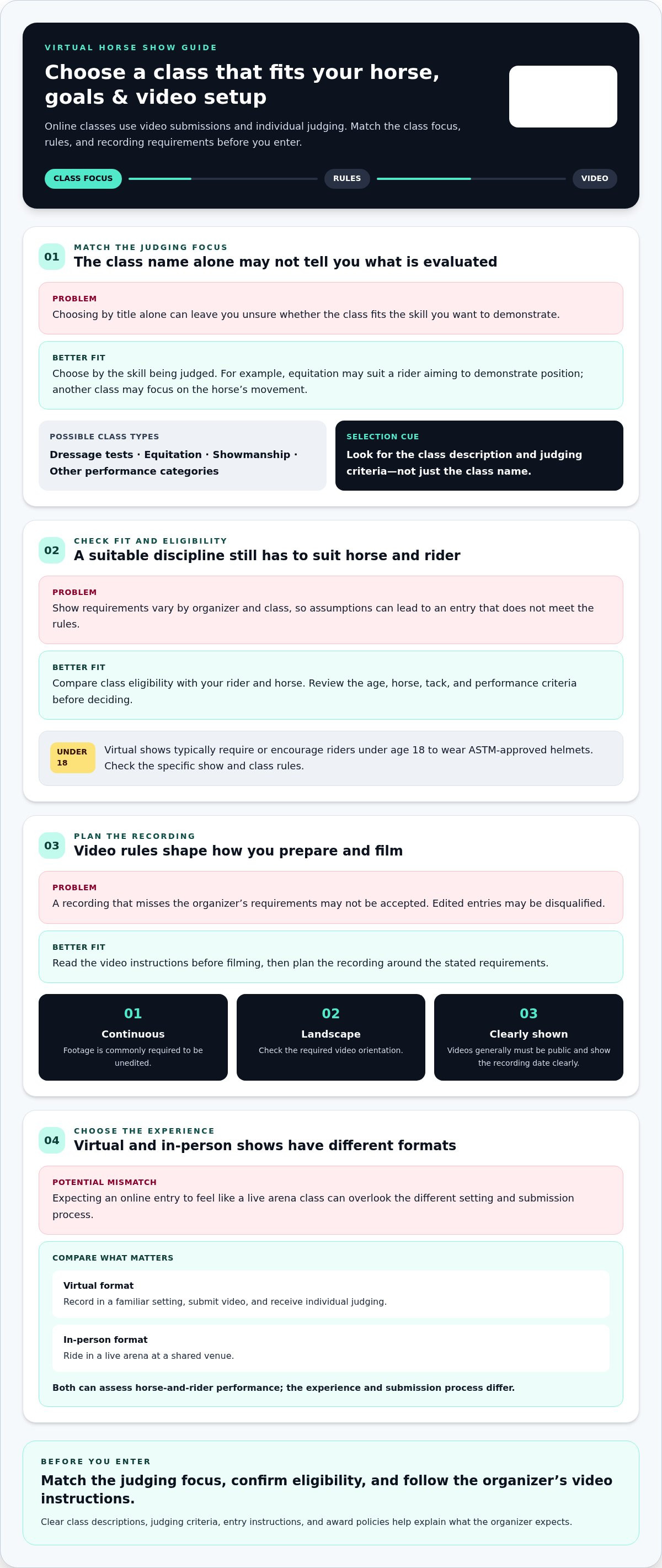
Recognized equestrian associations, discipline organizations, and established show organizers host online competitions. Before entering, look for clear class descriptions, judging criteria, entry instructions, and award policies. These details explain what the organizer expects.
Online shows replace a shared venue and live performance with video submission and individual judging. In-person shows take place in a live arena, while virtual formats let riders record in a familiar setting. Both can assess horse-and-rider performance, but the experience and submission process differ.
Class options vary by organizer and discipline. A show may offer dressage tests, equitation, showmanship, or other performance categories. Choose based on the skill being judged, not just the class name. For example, a rider aiming to demonstrate position may prefer equitation over a class focused on the horse’s movement.
Video rules shape your preparation. Organizers commonly require continuous, unedited footage in landscape orientation. Videos generally must be public and clearly show the recording date. Because edited entries may be disqualified, read the recording requirements before filming.
Safety and eligibility rules depend on the show and class. Virtual shows typically require or encourage riders under age 18 to wear ASTM-approved helmets. Read the class rules for age, horse, tack, and performance criteria, then match your entry to them.
Use this simple selection process:
Choose a discipline and skill the class evaluates.
Compare its eligibility rules with your rider and horse.
Plan a continuous, landscape video that follows the organizer’s instructions.
The best fit is a class whose judging focus, rules, and recording requirements suit your goals and setup.
Recognized equestrian associations, discipline organizations, and established show organizers host reputable online horse shows.
Texas Equine Education & Horsemanship™: Horse & Rider Showcase
Texas Equine Education & Horsemanship™ offers the Horse & Rider Showcase for riders interested in a horse-show experience. It may suit you if you’re exploring options beyond recorded online entries. Consider how the showcase format fits your goals and experience, and review its requirements before preparing.
If you’re building confidence or foundational skills, an Introductory Lesson can be a place to start. Equine Care Classes offer a way to learn about horse care alongside your riding interests. Choose the option that best matches your next learning goal.
For details about the Horse & Rider Showcase, visit Texas Equine’s horse show information.
Choose a confident next step
Choosing online horse show classes can give your riding a focused goal. Before entering, consider what you want to develop next and which kind of experience will support that aim.
A small, purposeful next step can help you keep progressing. Choose a skill to practice, discuss your goal with someone who supports your riding, and decide when you’re ready for a new challenge.
Let your interests and experience guide your decision. Each step can build confidence and support continued learning at a pace that feels right, whether developing hands-on equestrian skills or pursuing personal enrichment through online learning platforms like Eaalim.
Frequently Asked Questions
What are online horse show classes?
Online horse show classes are competitions where riders submit a performance recording for remote evaluation. Instead of performing before a live audience, you prepare an entry that follows the organizer’s video and class instructions. For example, you can record a class performance, submit it for review, and receive a placing and judges’ feedback. The class rules determine what your entry must include.
What types of online horse show classes are available in the United States?
United States organizers offer classes across English and Western disciplines, with specific options varying between shows. Online shows in both disciplines are available. Compare the classes listed for a particular event and choose according to its stated focus. A discipline label alone doesn’t tell you which skills or performance the judge will evaluate.
How do you enter an online horse show?
Choose an organizer and a class that match the performance you intend to submit. Read the eligibility requirements, entry instructions, and schedule together. Then register and pay as directed, saving your confirmation with the event details. Add the entry and video-submission deadlines to your calendar so you can plan and record without rushing.
How do you film and submit a horse show class video?
Follow the organizer’s recording instructions, then submit your video using its stated process. Virtual show videos are commonly required to be continuous, unedited, and filmed in landscape orientation. They generally must be public and clearly show the recording date. Submissions are commonly due two weeks after the entry deadline, so plan your filming around the event schedule.
What are the rules and judging criteria for online horse show classes?
Rules and judging criteria depend on the organizer and class. Read the class description for its performance requirements, eligibility details, and recording rules before filming. Judges evaluate entries individually and record scores and comments on a scoresheet. Virtual shows typically require or encourage riders under age 18 to wear ASTM-approved helmets. Follow the event’s stated instructions for your class.




Comments