


Safe Horse Handling: A Guide to Foundational Horsemanship

Did you know that over 65,500 people in the United States are treated in emergency departments for horse-related injuries every year? This statistic isn't meant to cause fear, but rather to highlight why learning to handle horses safely is the most important skill any equestrian can develop. It's completely normal to feel a bit nervous when a thousand pound animal doesn't seem to be listening or shifts its weight toward you. You might worry about being stepped on or find yourself confused by a sudden flick of an ear. We understand those feelings because every experienced horse person started exactly where you are today.
Building a partnership with a horse requires more than just physical strength; it demands an understanding of how they think and feel. We're here to help you move from a place of uncertainty to one of quiet confidence. In this guide, you'll learn the essential principles of equine psychology and foundational ground skills that foster respect instead of fear. We'll explore the why behind their reactions, providing you with the tools to approach, halter, and lead your horse with clarity. By focusing on these core elements, you'll establish a stable foundation for a lifelong connection where the horse truly becomes your partner in learning.
Table of Contents
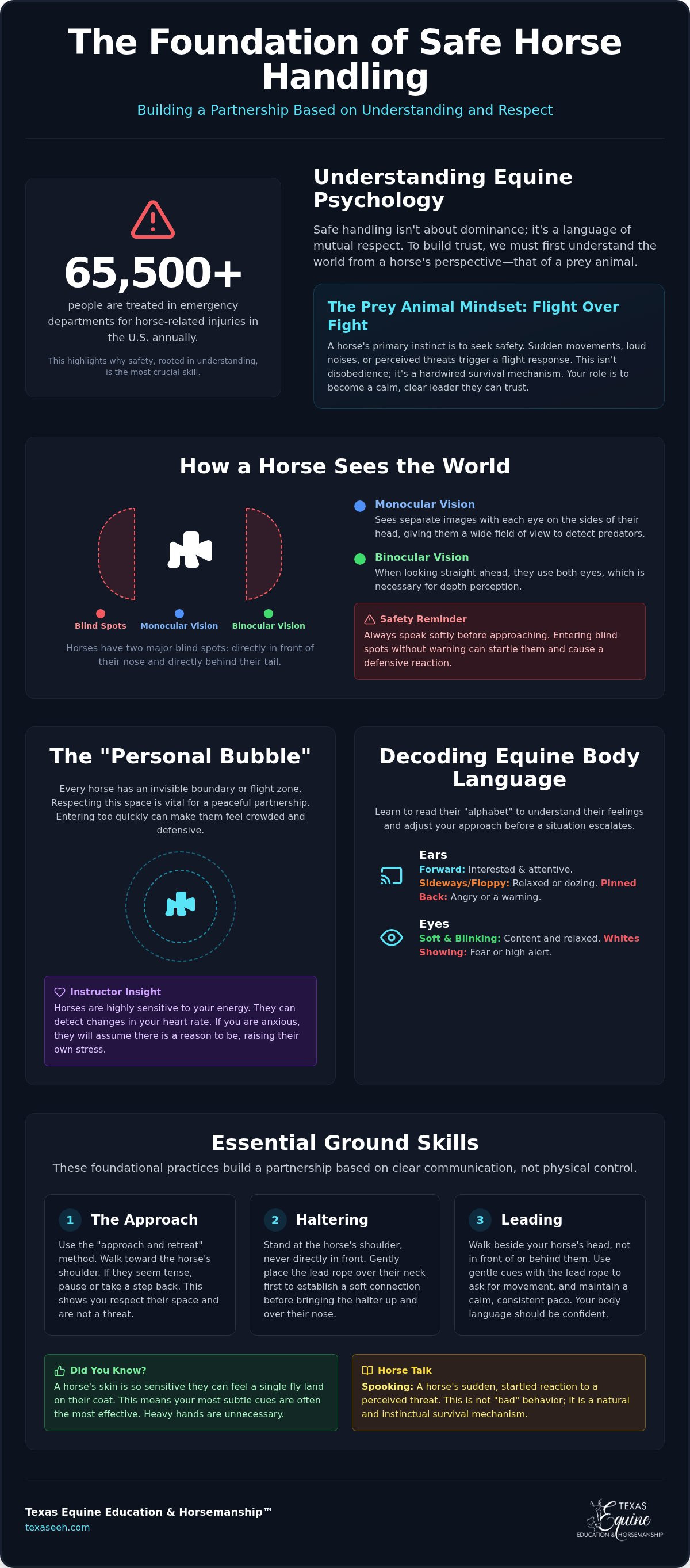
Understanding Equine Psychology: The Foundation of Safe Handling
Safe horse handling isn't about physical dominance or using strength to force a thousand pound animal to obey. Instead, it's a state of mutual respect where both the human and the horse feel heard and understood. When you're learning to handle horses safely, you're essentially learning a new language. This language is rooted in the biology of a prey animal, which is vastly different from our own human perspective. By understanding how a horse perceives the world, you can build a relationship based on trust rather than one based on fear or confusion.
Horse Talk:
Spooking refers to a horse's sudden, startled reaction to a perceived threat. This is not "bad" behavior; it's a natural survival mechanism designed to keep them alive in the wild.
Horses are hardwired to prioritize safety above all else. This means they are biologically programmed for flight over fight. If something feels wrong or seems out of place, their first instinct is to create distance between themselves and the source of their concern. They aren't trying to be difficult. They're trying to stay safe. Recognizing this shift in their focus allows you to stay calm and help them process the environment around them.
Instructor Insight:
Horses are incredibly sensitive to the energy you bring into their space. They can actually detect changes in your heart rate and muscle tension. If you are anxious, your horse will assume there is a reason to be worried, which raises their own stress levels.
Prey Instincts and the Flight Response
In a natural environment, horses rely on herd mentality for protection. They look to a trusted leader to decide when it's time to graze and when it's time to move. When we work with them, we must step into that leadership role with kindness and clarity. Sudden movements or loud noises can trigger their sympathetic nervous system, causing an immediate physical response. Understanding the "why" behind these reactions is the best way to prevent common handling accidents. For those who want to dive deeper into these mental frameworks, our Foundational Horsemanship Course offers a comprehensive look at equine psychology.
Understanding the Horse’s Field of Vision
A horse sees the world differently than we do. They have monocular vision, seeing separate images with each eye on the sides of their head, and binocular vision when they look straight ahead. This affects their depth perception and explains why they might need to move their head to focus on a new object. Because they are learning to handle horses safely alongside you, they need to know where you are at all times.
Safety Reminder:
Always speak softly to a horse before entering their peripheral vision. They have two major blind spots: directly in front of their nose and directly behind their tail. Entering these areas without warning can startle them and cause a defensive reaction.
Decoding Equine Body Language and the Personal Bubble
Every horse carries an invisible boundary known as the "Personal Bubble" or flight zone. When learning to handle horses safely, recognizing this zone is vital for maintaining a peaceful partnership. Think of it as their private space. If you enter it too quickly, they may feel crowded and react by moving away or becoming defensive. Establishing boundaries isn't about being aggressive; it's about being clear and consistent so the horse knows what to expect from you.
Did You Know?
A horse's skin is incredibly sensitive. They can feel a single fly land on their coat. This means you don't need heavy hands or loud gestures to communicate your intentions. Your most subtle cues are often the most effective.
For more details on the equipment used during these interactions, you might explore Essential Horse Safety for New Riders.
Reading the Equine Alphabet: Ears, Eyes, and Tail
Understanding what a horse is saying requires watching their physical "alphabet." By observing these signs, you can adjust your energy before a situation escalates.
Ears: Pinned flat back against the neck usually signal anger or a warning to stay away. Forward ears show interest, while floppy, sideways ears suggest the horse is relaxed or even dozing.
Eyes: If you see the whites of a horse's eyes, they are likely feeling fear or panic. Soft, rhythmic blinking is a wonderful sign of contentment and relaxation.
Tail: A swishing tail often indicates irritation or flies, while a tucked tail can mean the horse is cold or frightened. A tail held high often shows excitement or high energy.
Establishing Respect for Personal Space
We use a concept called "pressure and release" to teach a horse to respect our bubble. If a horse crowds you, you apply a small amount of "pressure." This might be a firm look, a pointed finger, or a rhythmic movement of the lead rope. The moment the horse steps back and honors your space, you immediately "release" the pressure by stopping the movement. This reward of comfort teaches them exactly where the boundary lies.
A good rule of thumb is the "Three-Foot Rule." You should generally maintain a yard of space between your body and the horse unless you are actively grooming or tacking up. While it's tempting to let a horse nuzzle you, this is a common beginner mistake. Treating a horse like a large dog can lead to accidental nipping or the horse believing they can push into your space whenever they like.
Safety Reminder:
Never wrap a lead rope around your hand, arm, or body. If the horse spooks or pulls away suddenly, you could be dragged or seriously injured. Always fold the excess rope in a "figure-eight" pattern in your hand instead.
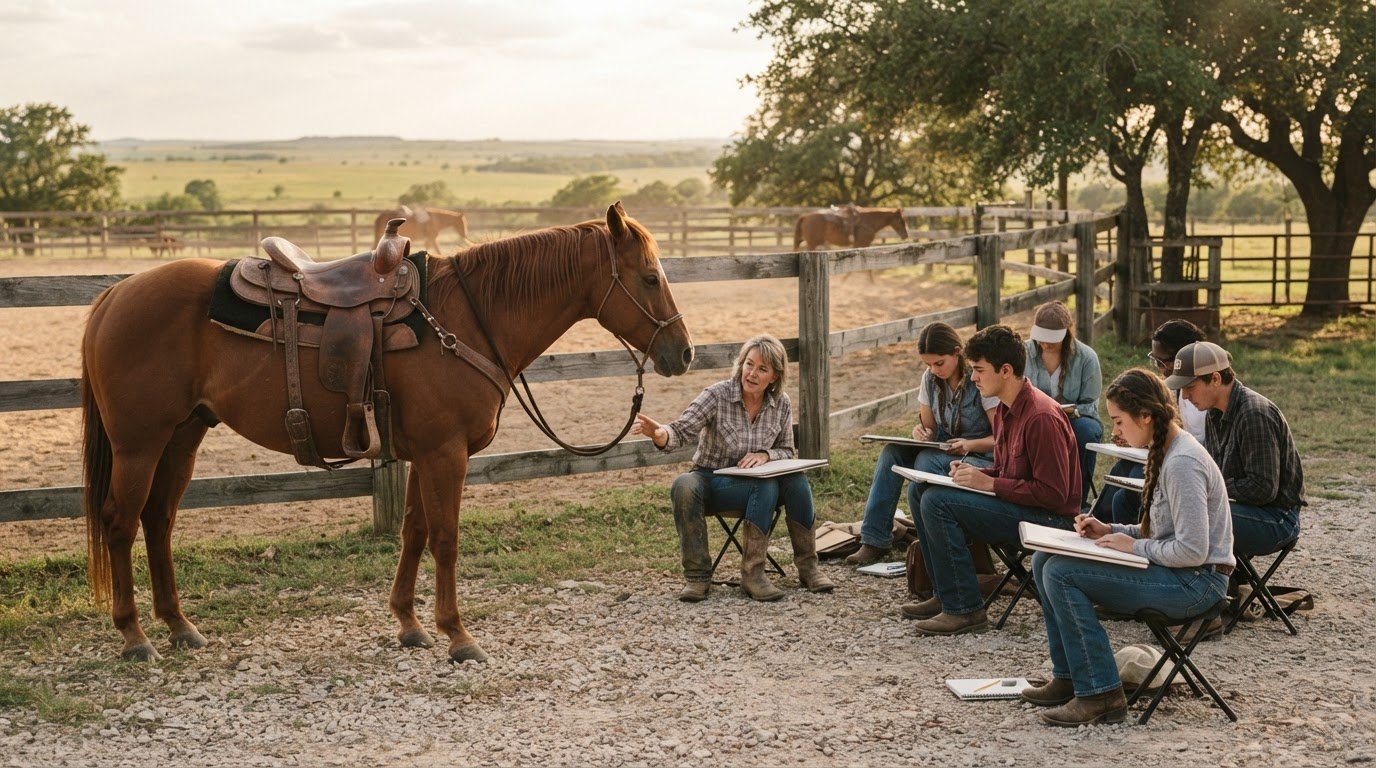
If you're ready to practice these communication skills in person, our horsemanship lessons provide a supportive environment for hands-on learning.
Essential Ground Skills: Approaching, Haltering, and Leading
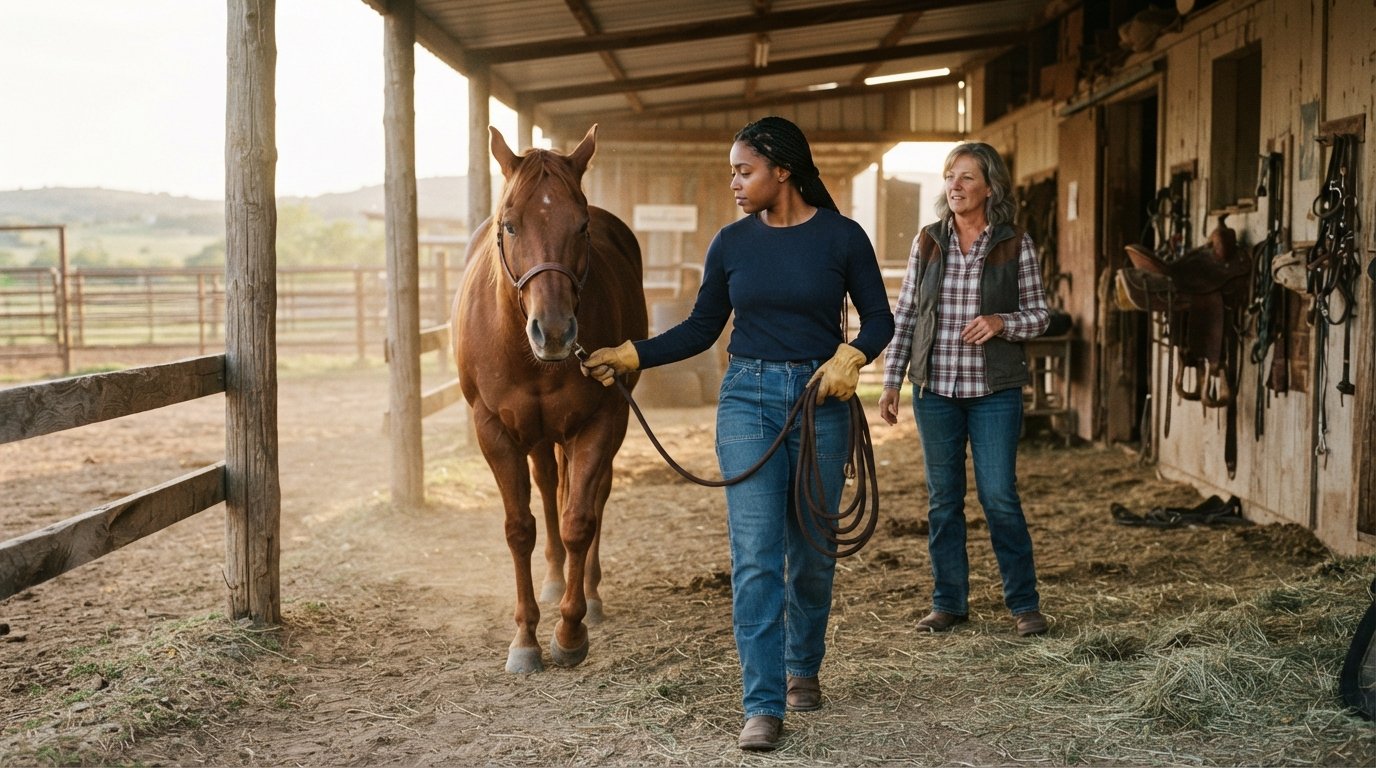
Ground skills are the physical application of the trust and psychology we have discussed. Learning to handle horses safely requires translating your knowledge into clear, rhythmic movements that the horse can easily interpret. When you enter a pasture or a stall, your goal is to be seen as a calm leader rather than a source of pressure. We use the "Approach-Retreat" method to achieve this. If a horse shows signs of wanting to move away, simply stop your forward progress and take a step back. This "retreat" rewards the horse by removing pressure, which often encourages them to stay curious and wait for you.
Instructor Insight:
In the horse world, we primarily handle animals from the "near side," which is the horse's left side. While it is important for a well rounded horse to be handled from both sides eventually, starting on the left provides a consistent routine that helps the horse feel secure during the learning process.
The Proper Way to Approach and Halter
Haltering is a three step process that prioritizes your safety and the horse's comfort. By following these steps, you stay out of the "danger zones" directly in front of and behind the horse.
Step 1: Approach the shoulder at a 45-degree angle. Never walk straight toward a horse's face, as this can feel confrontational. Speak calmly as you move to ensure they know exactly where you are.
Step 2: Once you reach the shoulder, gently place the lead rope over the horse's neck. This acts as a temporary "safety brake," giving you a point of contact and control before you ever reach for the head.
Step 3: Hold the halter in your left hand and reach your right arm over the horse's neck to guide the crown piece. Slide the noseband over the nose and buckle it snugly. It should be tight enough not to slip, but loose enough for the horse to chew comfortably.
Leading with Intent and Awareness
When you begin walking, your body position tells the horse exactly what to do. You should stand halfway between the horse's eye and their shoulder. If you get too far ahead, you lose sight of their body language. If you fall too far behind, you may find yourself in a position where the horse can easily pull away.
Hold the lead rope with your right hand about six to ten inches below the halter. The remaining length of the rope, called the "bight," should be folded neatly in your left hand. To communicate direction, think of your belly button as a flashlight. Point your core in the direction you want to go, and the horse will naturally follow that energy. When you stop your feet and turn your core back toward the horse, they should mirror your energy and come to a soft halt.
If you're looking for a place to practice these techniques under the guidance of a patient mentor, we invite you to explore our horsemanship lessons and ground work classes.
Building Consistency and Advancing Your Horsemanship Skills
Consistency is the quiet thread that holds a partnership together. When you're learning to handle horses safely, your horse is looking for a predictable leader who reacts the same way every time. If your energy is calm one day but frantic the next, the horse becomes confused and loses confidence in your guidance. By providing a steady environment, you allow the horse to relax and focus on the lessons at hand. This emotional stability is just as important as the physical skills you practice.
Texas Equine Tip:
Keep a horsemanship journal to track your progress. Writing down your "Aha!" moments and the specific challenges you overcame helps solidify your education and provides a wonderful record of your growth as a horseman.
Sometimes, despite your best efforts, a horse may have a sudden reaction. In these moments, your ability to stay calm is your greatest safety tool. If the horse spooks, take a deep breath and lower your own heart rate. If you mirror their panic, the situation can escalate quickly. By remaining an anchor of tranquility, you show the horse that the environment is still safe and they can return to a relaxed state.
The Role of Routine in Safety
Horses are creatures of habit that find comfort in predictable schedules and handling methods. This predictability reduces their overall stress and makes them more receptive to learning. Part of a safe routine includes a "pre-flight" safety check. Every time you handle your horse, inspect your equipment for signs of wear. Look for fraying on lead ropes or cracked leather on halters that could fail under pressure. Additionally, you can improve safety by gradually desensitizing your horse to common "scaries" like plastic bags or umbrellas. Use the approach-retreat method to introduce these items slowly, rewarding the horse for staying curious and calm.
Where Horses Inspire Learning: Resources for Growth
True horsemanship is a journey of self-discovery as much as it is animal training. It requires a commitment to lifelong learning that goes far beyond the time spent in the saddle. For our younger handlers, The Reading Rein™ offers a unique way to combine literacy with a love for horses. If you prefer to study from the comfort of your home, our Virtual Education Thursdays provide a weekly community where we dive deep into equine theory and behavior.
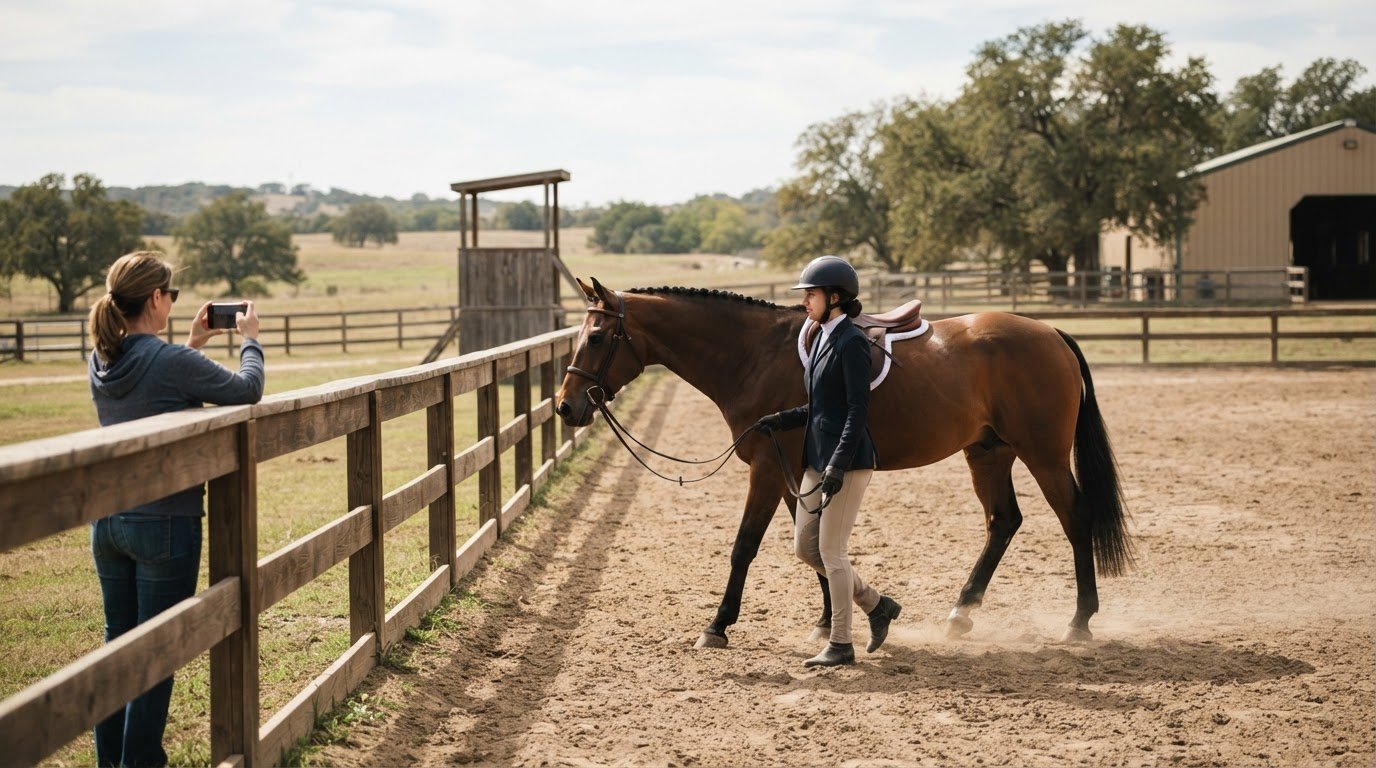
As you continue to build your skills, consider sharing your progress with others. You can continue your learning journey by participating in the Horse & Rider Showcase™, which celebrates the foundational work that makes every equine partnership successful.
Strengthening Your Equine Connection
Mastering the art of horsemanship is a rewarding endeavor that begins with a single, respectful step. By prioritizing equine psychology and learning the nuances of body language, you've already shifted your approach from one of control to one of communication. Learning to handle horses safely isn't a destination you reach overnight; it's a continuous process of observation, refinement, and mutual understanding between two different species.
Engaging with our Weekly Virtual Education Community or watching a young handler find their voice through The Reading Rein™ offers a unique perspective on this shared growth. For those aiming for professional excellence, our Equine Industry Readiness Program™ Certification ensures your skills meet the highest standards of safety and care. We invite you to explore additional educational resources and foundational workshops to support your ongoing development. The journey of horsemanship is one of the most transformative experiences a person can have. Keep showing up with a quiet heart and an open mind, and the horses will continue to inspire your learning every day.
Frequently Asked Questions
How do I approach a horse safely for the first time?
You should always approach a horse toward their shoulder at a 45-degree angle while using soft vocal cues. Walking directly toward a horse's face can feel confrontational to a prey animal. By speaking calmly as you walk, you ensure the horse isn't startled by your presence. This method allows you to stay within their field of vision and avoids their blind spots, which is a key part of learning to handle horses safely.
What are the blind spots for a horse?
A horse's primary blind spots are located directly in front of their nose and directly behind their tail. Because their eyes are set on the sides of their head, they cannot see objects in these specific zones without moving their head. To stay safe, you should avoid standing in these areas or moving into them suddenly. Always make sure the horse knows where you are by maintaining physical contact or using your voice.
Why is groundwork important before riding?
Groundwork serves as the essential foundation for trust, respect, and clear communication. Before you ever step into the stirrup, these exercises allow you to establish a common language and understand the horse's temperament. This is a vital part of learning to handle horses safely because it builds a partnership before you add the complexity of riding. This preparation ensures that when you do start riding, both you and the horse feel confident and connected.
How do I teach a horse to respect my personal space?
You can teach a horse to respect your personal space by using the pressure and release method. If a horse crowds your shoulder, apply a small amount of rhythmic pressure, like a steady gaze or a wave of the lead rope. The instant the horse steps back and honors your personal bubble, you must immediately release that pressure. This release is the reward, helping them learn that maintaining a respectful distance is the most comfortable place to be.
What should I do if a horse gets spooked while I am leading it?
If a horse spooks while you are leading it, the most important step is to remain calm and avoid pulling back on the lead rope. Yanking on the rope often increases the horse's panic because they feel trapped. Instead, keep your own feet moving and try to direct the horse's focus back to you with a gentle, rhythmic cue. By acting as a steady anchor, you help the horse realize the perceived threat isn't dangerous.
Can children learn to handle horses safely?
Children can certainly begin learning to handle horses safely through age-appropriate instruction like our Tiny Tot Lessons. We focus on teaching young handlers the basics of horse behavior and safe positioning in a way that is fun and easy to understand. By starting with small, gentle horses and emphasizing respect for the animal's space, children build a foundation of confidence. These early lessons instill a lifelong habit of safety and a deep appreciation for the horse human connection.


Comments