


Mastering Rider Communication: Building Trust with Horses

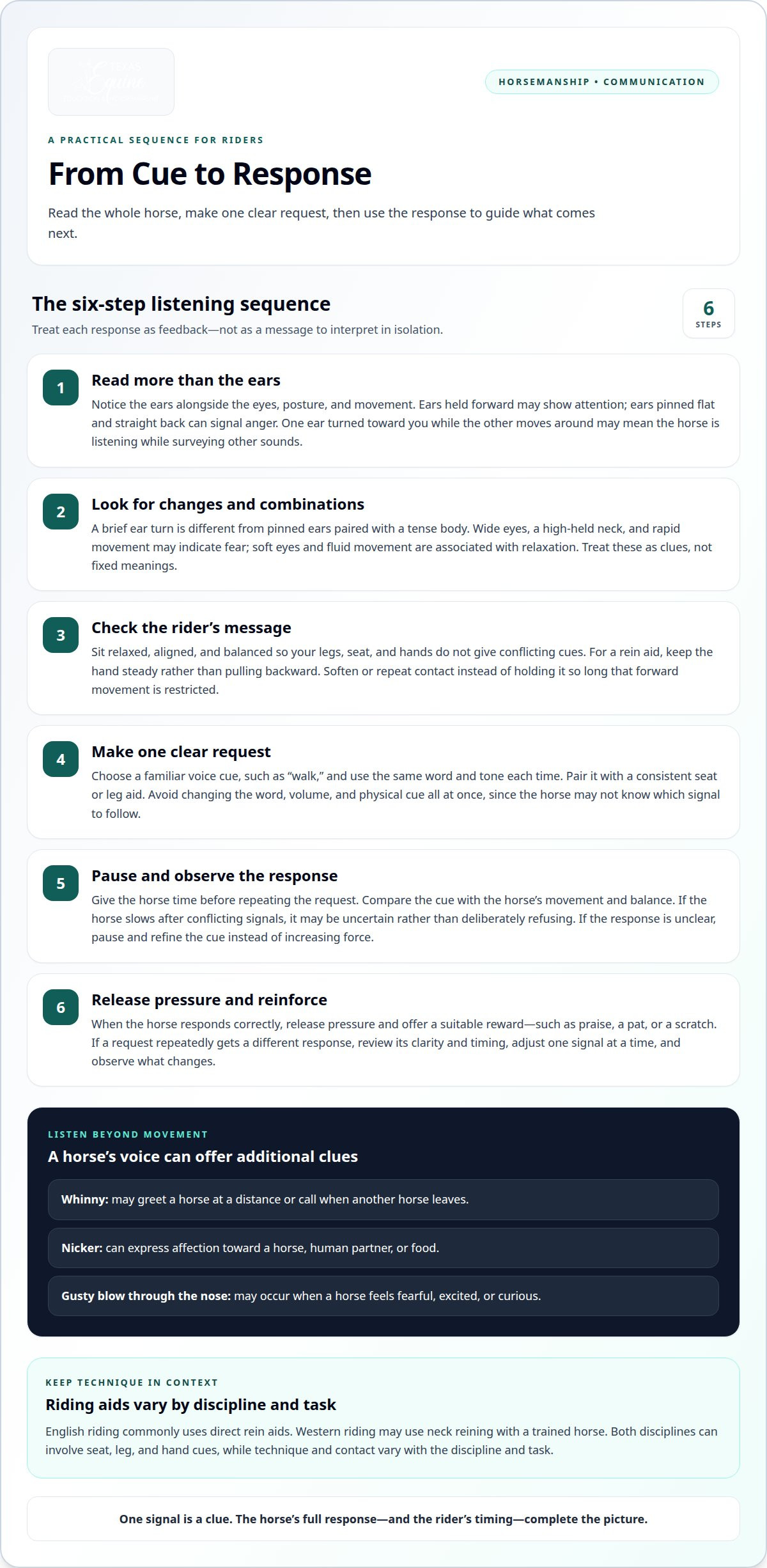
A horse rarely communicates through one signal alone. Rider communication with horses means reading body language, facial expressions, and sounds together, then noticing how the horse responds. Ears pinned straight back can signal anger, while one ear turned toward a person and the other moving around may show the horse is listening while also attending to other sounds.
It can be difficult to tell whether a cue was clear or how a horse is feeling in the moment. Looking at the whole partnership can make signals easier to understand: notice the horse’s ears, eyes, posture, and movement, then consider whether your balance and timing support a calm response. This article explains common ear positions and emotional cues, and shows how to assess the ongoing exchange between horse and rider. The goal is not to interpret one gesture in isolation, but to develop a more attentive, consistent way of listening and responding.
Table of Contents
Ear positions and emotional cues
A horse’s ears offer clues, but they’re only one part of its body language. Ears pinned flat and straight back can signal anger; ears held forward may show attention. If one ear turns toward you while the other moves around, the horse may be listening to you while also surveying other sounds. Read these signs alongside the horse’s eyes, posture, and movement before deciding what its expression means.
Notice changes rather than relying on a single position. For example, pinned ears paired with a tense body call for a different response than ears briefly turning back toward a rider. Give the horse room to respond, and keep respect at the centre of this shared language. Patient observation supports learning without treating every movement as a fixed signal.
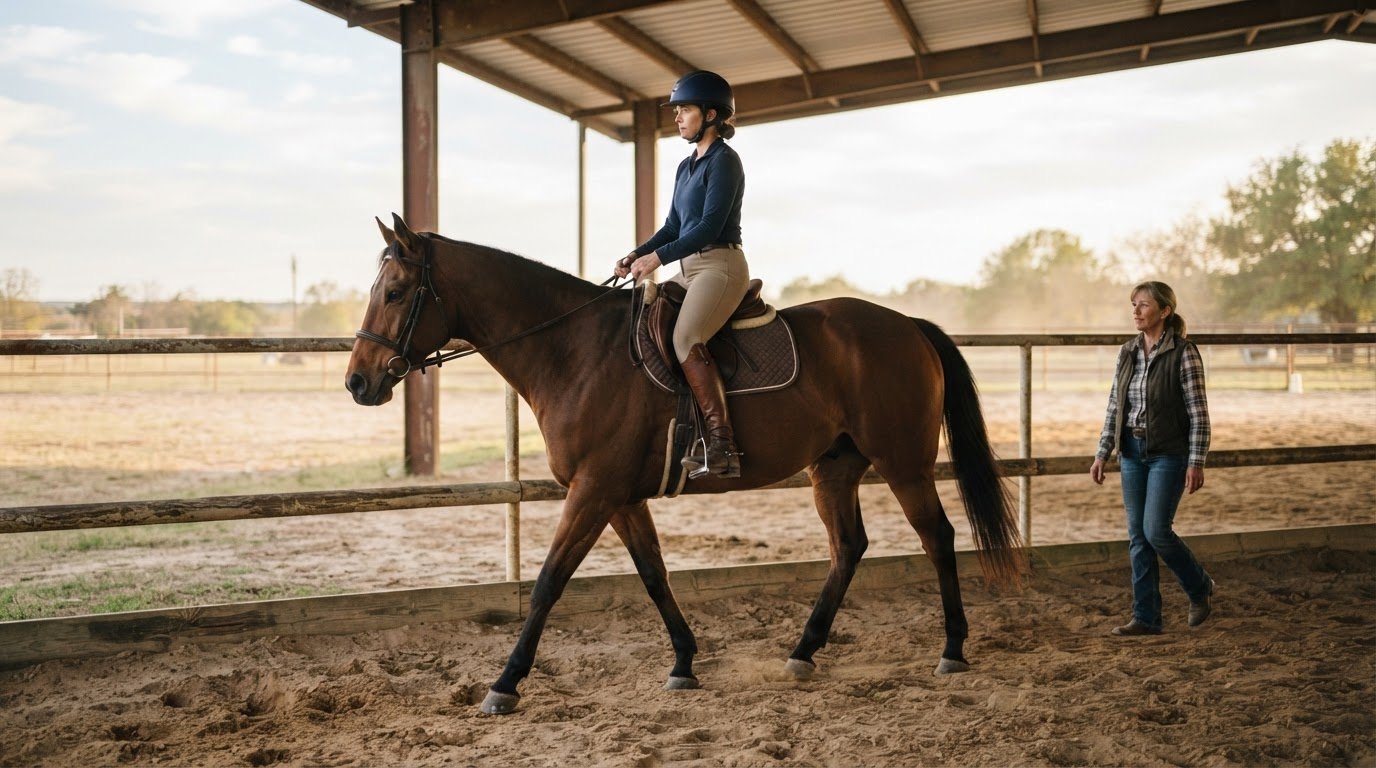
Your posture also contributes to the message. Sit relaxed, aligned, and balanced so your legs, seat, and hands don’t give conflicting cues. For a rein aid, keep your hand steady rather than pulling backward. Soften or repeat the contact instead of holding it so long that forward movement is restricted.
After a horse responds correctly, release pressure and offer a suitable reward, such as praise, a pat, or a scratch. Positive reinforcement means giving something the horse values, helping it connect the response with the cue.
English riding commonly uses direct rein aids, while Western riding may use neck reining with a trained horse. Both disciplines can involve seat, leg, and hand cues, but technique and contact vary with the discipline and task.
Harsh or conflicting cues can confuse a horse or cause discomfort and tension. Make one clear request, stay balanced, and release pressure when the horse responds. If the response is unclear, pause and refine the cue rather than increasing force.
Assessing the horse-rider partnership
Assess the partnership by comparing each request with the horse’s response, movement, and balance. Rider communication with horses becomes clearer when you consider both sides’ signals together.
Common Horse-Rider Misunderstandings
Misunderstandings arise when a rider treats a horse’s response as deliberate refusal instead of feedback about the cue. For example, a horse that slows after conflicting signals may be uncertain, not disobedient. Repeating the request without waiting can make it harder to understand. There isn’t one riding cue that suits every horse or setting, so follow the instructions where you ride and keep requests controlled.
Building Communication and Trust
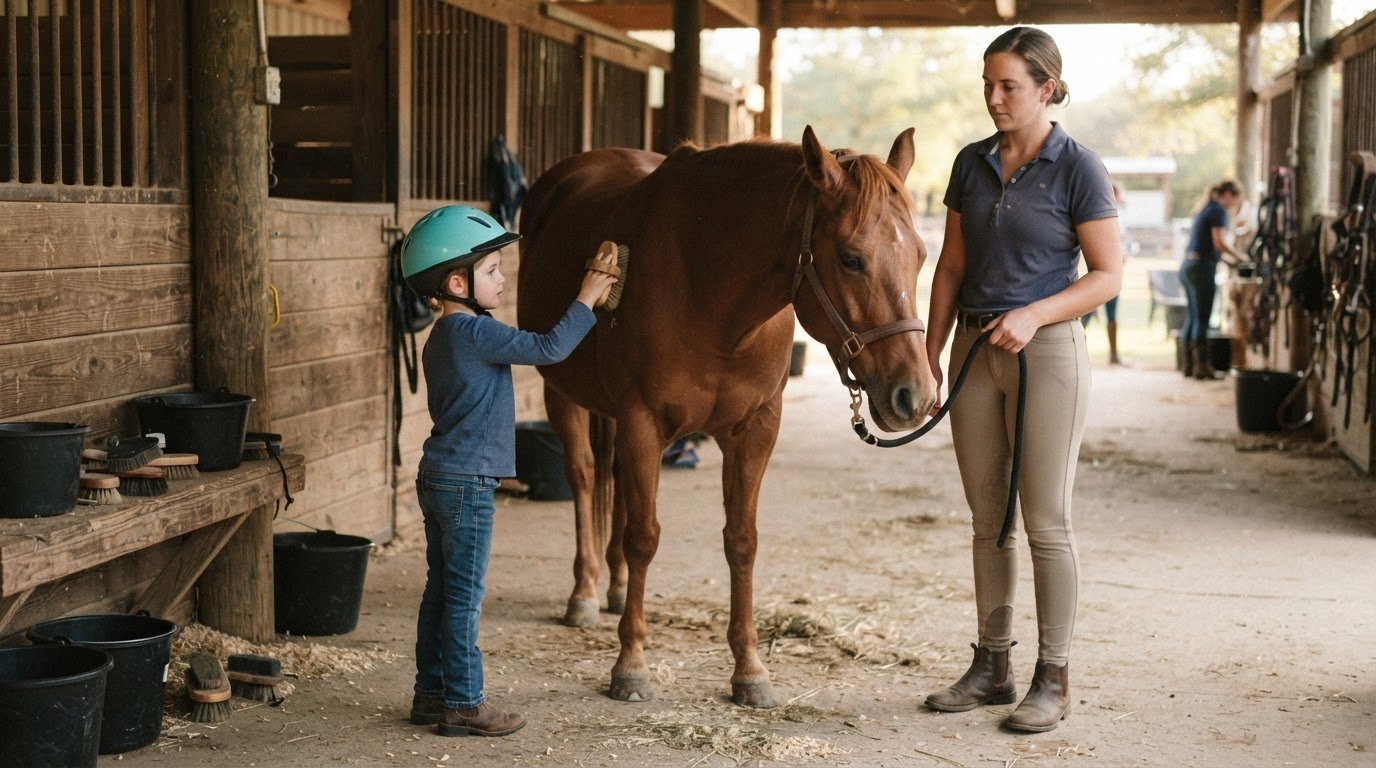
Building trust means creating consistent, understandable exchanges on the ground and in the saddle. On the ground, invite the horse to respond to your direction and notice whether it follows, pauses, or turns away. While riding, coordinate your posture and aids with the horse’s movement. Rider communication with horses improves through clear signals, steady timing, and attention to the horse’s response.
Look at several signs together. Wide eyes, a high-held neck, and rapid movement may indicate fear, while soft eyes and fluid movement are associated with relaxation. If a horse spooks, slows, or swishes its tail rapidly, consider whether your focus or balance changed. Regain your attention, give the horse a moment, and observe its next response rather than punishing it for a lapse in connection. This can help distinguish unclear requests from changes in the horse’s emotional state.
How should riders use voice cues when communicating with horses?
Use a calm, consistent voice cue alongside clear body signals. Choose one word for a familiar request, such as “walk,” and say it in the same tone each time. A horse can learn to connect a repeated cue with a known response, whether you’re on the ground or in the saddle. Give the horse time to respond before repeating the request.
A horse’s voice also offers clues about its state, not just a way for people to give cues. A whinny may greet a horse at a distance or call when another horse leaves. A nicker can express affection toward a horse, human partner, or food. A gusty blow through the nose may occur when a horse feels fearful, excited, or curious.
Keep a cue distinct from ordinary conversation. For example, use a familiar verbal signal for a transition, then listen and observe the horse’s movement. Pairing that signal with a consistent seat or leg aid helps create a shared language. Avoid changing the word, volume, and physical cue all at once, since the horse may not know which signal to follow.
Match your voice to your posture and intention. If you say “slow” while tensing your body and driving forward with your legs, the signals may conflict. Relax, make one clear request, and wait for feedback. Praise or another suitable reward after a correct response can reinforce the connection between cue and action.
If a request repeatedly gets a different response, review its clarity and timing. Ask yourself whether the horse knows the cue, whether your body supports it, and whether the setting is distracting. Adjust one signal at a time, then observe the result. This patient approach helps horse and rider build understanding without adding unnecessary pressure.
Texas Equine Education & Horsemanship™: Horse & Rider Showcase
Texas Equine Education & Horsemanship™ offers the Horse & Rider Showcase for readers interested in the horse-rider partnership. If you’re building foundational riding skills, an Introductory Lesson can support your learning, while Equine Care Classes help you develop knowledge of horses beyond the saddle.
These options serve different learning needs: consider an introductory lesson when you’re beginning or strengthening your riding foundation, and explore the showcase when you want to engage further with horsemanship. Clear communication grows through steady learning and thoughtful practice, with every horse and rider bringing their own needs to the partnership.
Contact Texas Equine Education & Horsemanship™ to discuss which learning option fits your horsemanship goals.
Let Each Ride Build Understanding
Trust grows through ongoing practice, as each ride gives you another chance to notice how your horse responds to your presence and cues. Let curiosity guide your next step: choose a learning experience that suits your goals, then keep developing your shared language with patience. Rider communication with horses is not a single technique to perfect, but a relationship strengthened through attention and practice.
Set one clear intention for your next ride, such as noticing how your horse responds to a familiar cue. Give yourself time to observe, adjust, and learn from each exchange. With steady attention and patient practice, you can keep building a thoughtful partnership with your horse.
Frequently Asked Questions
How do Horses Communicate?
Horses communicate through visible signals, sounds, and touch, with meaning shaped by the situation. A horse may shift its weight before moving away or respond differently when familiar people approach. Notice what happens before and after a signal, including the horse’s surroundings. Reading the sequence helps you understand the exchange more clearly than treating one movement as a complete message.
How do riders communicate with horses using seat, legs, and reins?
Riders combine seat, legs, and reins to guide movement while staying balanced. The lower legs contact the horse’s barrel, the seat supports the rider’s torso, and the hands connect through the reins. For example, a rider may use leg pressure to request forward movement while maintaining steady rein contact. The horse’s response travels back through the rider’s points of contact, informing the next cue.
What are common horse riding cues and what do they mean?
Leg pressure can ask a horse to move forward, step sideways, or change gait. Shifts in weight, posture, and seat bones can influence balance, rhythm, and collection. Rein signals help direct the horse, but shouldn’t replace a stable seat or coordinated body. A cue’s meaning depends on the horse’s learning and the rider’s timing, so observe the response before adding another aid.
How can a beginner learn to give clear riding cues?
A beginner can develop clear cues through guided practice with a qualified coach or mentor. Start with a familiar request, apply it consistently, and allow the horse time to respond. Ask for feedback about balance and timing, since a rider may understand an aid intellectually before feeling how it works in motion. Practice builds core strength and helps refine coordination without rushing the learning process.
How do horses communicate with riders through body language?
Horses communicate through posture, facial expression, and movement, and their signals are best read together. A low, loose tail can accompany relaxation, while a raised tail may occur with fear or excitement. Licking and chewing can appear as a horse relaxes and processes a concept. A horse may also look toward a person’s face, offering another cue to consider alongside its overall posture.


Comments