


Horse Show Preparation: Your Guide to a Successful Showcase

A successful show starts before you enter the arena. Good horse show preparation means choosing a suitable show and classes, confirming that your tack is permitted and in good condition, and packing what you and your horse need before show day. If you’re new to showing, a lower-stress event can offer a gentler introduction before larger competitions.
Polished tack and tidy turnout matter, but feeling organized also means choosing classes that suit your experience and preparing clothing and grooming supplies in advance. This guide covers practical checks for cleaning and packing tack, getting your outfit and your horse’s grooming ready, and choosing an appropriate show and classes. Follow the steps in order to make preparation manageable and focus on riding and your horse when you arrive.
Table of Contents
Cleaning and packing tack
Requirements vary by discipline and show, and entry or travel requirements can differ by state. Read the show instructions and discipline rulebook, then discuss tack rules with your trainer. These steps help you prepare equipment suited to your class and the event.
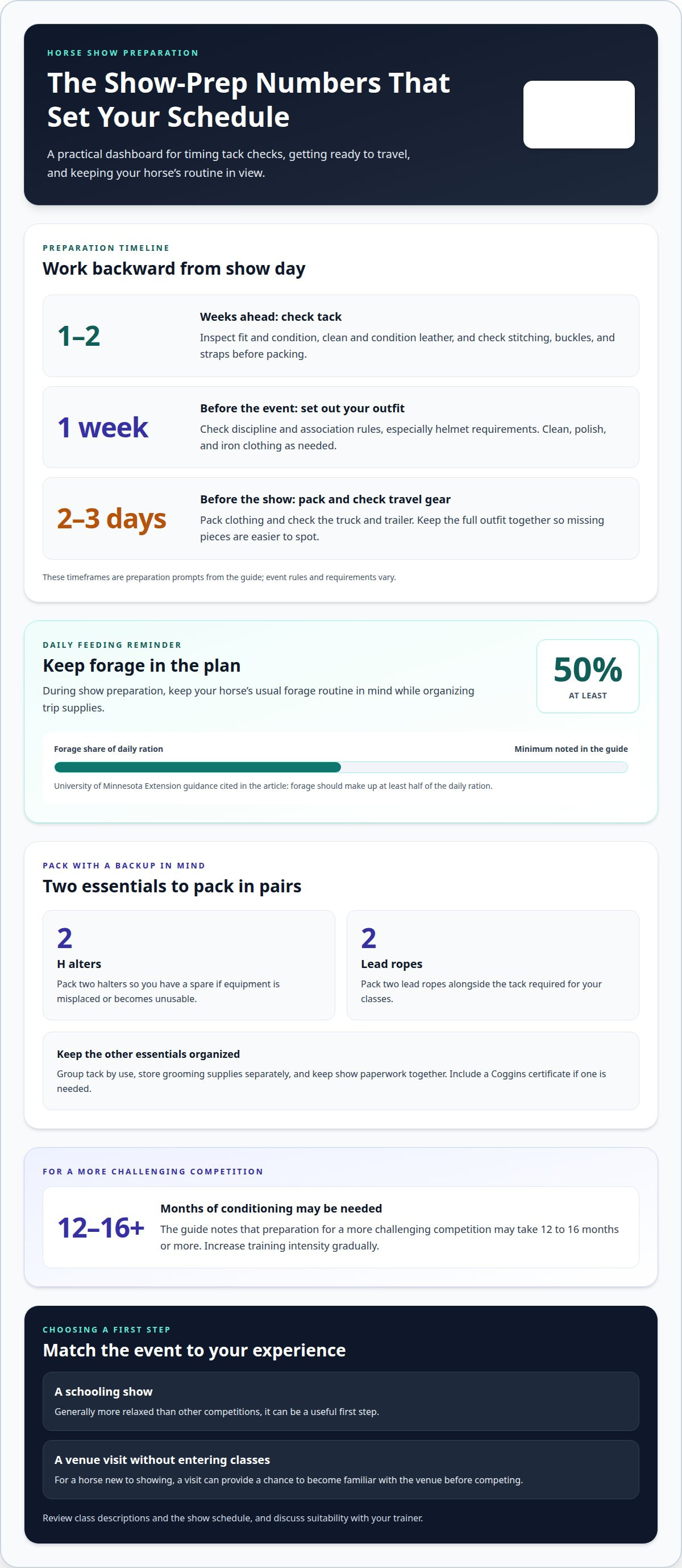
Begin horse show preparation a week or two ahead. Check that each item fits your horse and is in good condition. Cleaning early gives you time to address worn or missing equipment before packing.
Inspect your saddle, pads, girth, bridle, bit, martingale, reins, stirrup irons, leathers, and lunge line. This inventory helps you identify missing or damaged tack.
Clean leather with suitable tack cleaner, then condition it according to the product directions. Removing dust and sweat leaves equipment ready for use.
Check stitching, buckles, and straps as you clean. Wear or damage can affect how equipment functions, so set questionable items aside for assessment.
Pack two halters and two lead ropes, plus the tack required for your classes. A spare gives you a backup if equipment is misplaced or becomes unusable.
Keep show paperwork together, including a Coggins certificate if one is needed. A labeled binder makes essential documents easier to find at the event.
Pack tack in organized bags or containers, grouping items by use. For example, store grooming supplies separately from the bridle and saddle so you can find each item quickly.
Care also includes feeding. According to University of Minnesota Extension, forages should make up at least 50% of a horse’s ration daily, including during show preparation. Keep the horse’s usual forage routine in mind while organizing supplies for the trip.
Rider clothing and personal grooming
Show attire depends on the discipline and association, so no single outfit rule applies to every event. Read the show instructions and your breed or sport association’s rulebook, paying particular attention to helmet requirements. Common clothing includes breeches, a belt, show shirt, coat, boots, riding socks, helmet, and gloves.
Choose your outfit the week before the event, then clean, polish, and iron items as needed. Begin packing clothing and checking your truck and trailer 2-3 days before the show. Lay the full outfit together, including socks and gloves, so missing pieces are easier to spot.
Pack a brush, bobby pins, hair net, show bows, and travel mirror. These supplies help you arrange and tidy your hair at the venue.
Set aside a grooming kit with brushes, a mane and tail comb, hoof pick, sponges, towels, and braiding supplies. Keeping tools together makes the routine easier to follow.
Bathe your horse the day before the show, rinsing from the front toward the back. Use a sweat scraper to remove excess water, then let the coat dry completely.
If clipping ears or whiskers, use clean, sharp blades and check them regularly. Clipper blades can heat up quickly.
For a neat finish, brush your horse’s coat and mane, pick out the hooves, and braid where your discipline calls for it. Pack shampoo, conditioner, fly spray, and hoof oil with your grooming supplies. Keep clean clothing separate from used towels and bathing gear so your show attire stays ready to wear.
Review your outfit the week before the show to confirm each piece is clean, polished, and ironed as needed. Check the breed or sport association’s helmet rules as part of your preparation.
Choosing a show and classes
Choose an event that suits your horse’s experience, your riding goals, and the classes you can prepare for confidently. A schooling show is generally more relaxed than other competitions, making it a useful first step. A horse new to showing can also visit without entering classes to become familiar with the venue before competing.
Match each class to skills you and your horse already practice. Review the class descriptions and show schedule, then discuss suitability with your trainer. For a more challenging competition, conditioning may take 12 to 16 months or more. Increase training intensity gradually rather than asking for harder work all at once.
Entry and attendance costs in the United States depend on the event and your plans. Build a budget for entry fees, travel, lodging, stall arrangements, and supplies. Before committing, compare the event schedule and facilities with your needs.
Before traveling, carefully inspect the truck and trailer. Pack an emergency kit with spare tires, jumper cables, jacks, flares, a flashlight, and tools. Arrive early, organize your setup, and locate the show office, warm-up areas, arenas, and attending veterinarian or farrier. Check the schedule for changes so you don’t miss your class.
Before riding, learn the warm-up ring etiquette and make a plan. In the schooling ring, pass left shoulder to left shoulder. After strenuous work, cool your horse down and provide fresh bedding, plenty of water, and hay in its stall. These routines support a calmer transition from competition to rest.
Texas Equine Education & Horsemanship™: Horse & Rider Showcase
Texas Equine Education & Horsemanship™ offers the Horse & Rider Showcase as a next step for riders interested in participating in a showcase. After reviewing classes and preparing horse and rider, consider whether a showcase fits your goals and experience. The Horse & Rider Showcase connects directly with this article’s focus on horse shows. Reviewing its event information can help you understand its focus and decide whether it suits your plans. A showcase is one option to explore as you continue building your experience with horses and riding. Contact Texas Equine Education & Horsemanship™ to learn more about the Horse & Rider Showcase.
Let Your Next Step Build Confidence
A showcase can help you recognize what you’ve learned and choose a goal for your next ride. Let horse show preparation support steady learning rather than become a test of perfection. After the event, consider what you’d like to explore or practice next.
Your next step might be setting a new riding goal, learning more about horse care, or gaining experience at another event. A thoughtful goal gives you and your horse a clear direction to work toward together.
If you’d like to explore a next step, get in touch. Keep learning at a pace that suits you and your horse, and carry your growing confidence into the next ride.
Frequently Asked Questions
What should be on a horse show packing checklist?
Along with tack and clothing, pack supplies for your horse’s daily routine and your own comfort. Consider hay, feed, fly gear, shipping boots, and two water buckets per stall. A first-aid kit may include gauze, vet wrap, scissors, a thermometer, and antiseptic solution; ask your veterinarian which items are appropriate for your horse. Bring water and easy-to-eat snacks for yourself.
What vaccinations, health certificates, and Coggins test are required for horse shows?
Requirements depend on the show and state, so no single checklist applies everywhere. Read the event’s entry instructions for vaccination records, health certificates, and Coggins documentation, and account for state requirements when traveling. A Coggins certificate may be needed. Keep required papers together and accessible during travel and check-in.
What should you feed and water a horse before, during, and after a show?
Keep forage available throughout the day and provide fresh water during the event. A horse shouldn’t have a large meal before exercise, which could cause discomfort. Forage should total 1.5 to 2 percent of body weight daily, measured on a dry-matter basis. Develop feeding plans with a veterinarian or equine nutritionist, especially if heat, travel, or workload changes the routine.
How should you prepare yourself and your horse for a first horse show?
Make the first outing about learning, not pressure. A horse new to showing can visit a show without entering classes to become familiar with the setting. At home, practice the movements or pattern for a suitable class, then talk through the plan with your trainer. Agree on when to arrive and what to do if the schedule changes or your horse seems unsettled.


Comments