


Horse Grooming and Care Basics: Building a Foundation of Trust and Health
- Kim Williams

- 1 day ago
- 10 min read
What if the most important conversation you have with your horse today doesn't involve a single word or a saddle? Many new riders and even experienced horse owners often feel a bit overwhelmed by the rows of brushes and sprays in the tack room. It's completely normal to feel anxious about accidentally hurting your horse or failing to notice a hidden health issue. Understanding horse grooming and care basics isn't just about keeping a coat shiny; it's about establishing a language of touch that builds mutual respect.
I've seen how a simple grooming session can transform a nervous horse into a calm, attentive partner. In this article, you'll learn the essential techniques and philosophies of equine care to ensure your horse stays healthy while you strengthen your bond from the ground up. We'll walk through the specific tools you need, show you how to perform a basic health check, and explain how these daily habits create a foundation of trust. By the time we're finished, you'll feel confident handling your grooming kit and more deeply connected to your horse's physical and emotional needs.
Table of Contents
The Purpose of Grooming: More Than Just a Clean Coat
Grooming is often the first interaction you'll have with a horse, and it serves as the cornerstone of foundational horsemanship. While many beginners see it as a chore to finish before riding, we view it as a vital non-riding education skill. It ensures the safety of both the handler and the animal. Understanding horse grooming and care basics helps you develop a keen eye for detail, allowing you to notice small changes in your horse's condition before they become major concerns. By starting your session on the ground, you're prioritizing the horse's well-being over the activity of riding.
The Social Bond: Building Trust from the Ground Up
In the wild, horses engage in a behavior called allogrooming, where they nibble at each other's necks and withers to strengthen social ties. When you pick up a brush, you're stepping into that social role. This process establishes a quiet conversation between you and your partner. As you work, pay close attention to your horse's body language. A sigh, a lowered head, or a relaxed ear tells you that your horse feels safe and respected in your care. Maintaining a calm, patient presence mirrors the tranquility of a healthy stable environment and builds a bridge of trust that carries over into the saddle.
Instructor Insight:
A clean horse is a safer horse under tack. Even a small amount of grit or dried mud under a saddle pad or girth can cause painful friction, leading to "girth galls" or sores. Proper grooming ensures there is nothing to irritate the skin once the equipment is in place.
Preventative Health and Diagnostic Benefits
Think of your grooming session as a daily physical exam. While the brushes remove dirt, your hands act as scanners. By running your hands over your horse's legs and body, you can detect heat, swelling, or new nicks that might be hidden by hair. This early detection is a key part of horse grooming and care basics that prevents minor issues from escalating. Brushing also serves a biological purpose beyond cleanliness. The rhythmic motion acts like a massage, which is particularly beneficial for active horses.
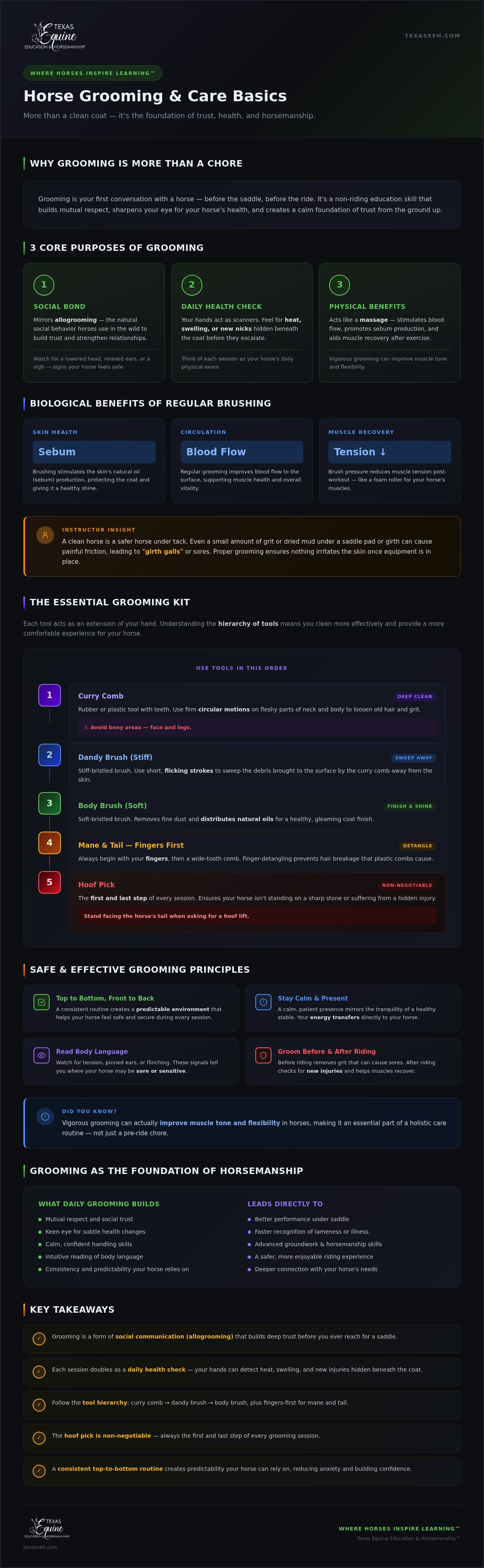
Skin Health: Brushing stimulates the skin to produce sebum, a natural oil that protects the coat and gives it a healthy shine.
Circulation: Regular grooming improves blood flow to the surface, supporting muscle health and overall vitality.
Muscle Recovery: The pressure of the brushes can help reduce muscle tension after a workout, similar to how an athlete uses a foam roller.
Did You Know?
Vigorous grooming can actually improve muscle tone and flexibility in horses, making it an essential part of a holistic care routine.
The Essential Horse Grooming and Care Basics Kit
Your grooming kit is much more than a collection of plastic and wood. Each tool acts as an extension of your own hand, allowing you to communicate clearly with your horse while you work. When you understand the hierarchy of these tools, you can clean more effectively and provide a more comfortable experience for your horse. Mastering horse grooming and care basics starts with knowing which tool to reach for and why the order matters.
Horse Talk:
Curry Comb: A rubber or plastic tool with teeth used in circular motions to loosen deep-seated dirt.
Dandy Brush: A stiff-bristled brush designed to flick away the debris brought up by the curry comb.
Body Brush: A soft-bristled brush that removes fine dust and adds a finishing shine.
Brushes and Combs: Choosing the Right Tool
The grooming process begins with the curry comb. Use firm, circular motions on the fleshy parts of the neck and body to loosen old hair and grit. It's best to avoid using this tool on the bony areas of the face or legs. Once the dirt is on the surface, the stiff (dandy) brush comes into play. Use short, flicking strokes to sweep the debris away from the skin. Finally, the soft body brush smooths the coat and distributes natural oils for a healthy glow. For manes and tails, I always suggest starting with your fingers. Patience is key here; finger-detangling prevents the hair breakage that often occurs with plastic combs.
Hoof Care Essentials: The Most Important Step
Cleaning hooves is the non-negotiable first and last step of every grooming session. A hoof pick is your primary tool for ensuring your horse isn't standing on a sharp stone or suffering from a hidden injury. To safely ask a horse to lift its foot, stand facing the horse's tail. Run your hand down the leg and apply gentle pressure to the "chestnut," which is the callous on the inside of the leg. Most horses will shift their weight and lift the foot for you.
Common Beginner Mistakes:
Be careful not to dig the point of the hoof pick into the "frog." This is the V-shaped, rubbery area in the center of the hoof. It's highly sensitive and acts as a shock absorber. Focus your cleaning on the deep grooves, or commissures, on either side of the frog instead.
Always keep your tools clean by washing them regularly with mild soap. Dirty brushes can easily spread skin conditions like rain rot from one horse to another. If you're looking for hands-on guidance to perfect these techniques, our Equine Care Classes provide a supportive environment to practice under the eye of an experienced instructor.
A Step-by-Step Guide to Safe and Effective Grooming
Horses thrive on predictability. When you establish a consistent routine, you're telling your horse exactly what to expect, which reduces anxiety for both of you. A standard approach to horse grooming and care basics follows the "Top to Bottom, Front to Back" rule. This logical flow ensures you don't miss any spots and keeps the dust moving away from the areas you've already cleaned. By following the same sequence every time, you create a sense of security that helps your horse relax and enjoy the process.
Preparation and Safety Protocols
Before you pick up a brush, ensure your horse is safely secured. Always use a quick-release knot when tying to a hitching rail or in cross-ties. This allows you to free the horse instantly in an emergency. Your physical position is your best safety tool. Horses have a wide field of vision, but they can't see directly in front of their noses or directly behind their tails.
Safety Reminder:
Avoid standing in those blind spots. Instead, stay near the shoulder or hip where they can see you easily. Keep one hand on the horse's body as you move around them. This constant physical contact prevents you from startling them if they lose sight of you for a moment.
The Grooming Sequence: From Curry to Shine
I always recommend starting with the hooves. It's the best way to immediately check for trapped stones or early signs of thrush. Once the feet are clear, move to the body. Start at the neck and work toward the hindquarters, moving from the top of the back down toward the belly. This ensures that any dirt loosened from the top doesn't fall onto a section you've already finished.
The Face and Dock: Use a clean, damp sponge or soft cloth to gently wipe the eyes and nose. Use a separate cloth for the dock area to maintain proper hygiene.
Tack Check: Pay extra attention to the girth line and the saddle path. These areas must be impeccably clean to prevent friction and sores once you begin your ride.
Ground Manners: If your horse fidgets, use a calm voice and a steady hand to ask them to stand.
Texas Equine Tip:
Use this time to practice standing ground exercises. Grooming is the perfect opportunity to teach your horse patience and focus without the pressure of a formal riding environment.
Developing these habits is a step-by-step endeavor that prepares you for more advanced handling. To see these techniques in action and receive personalized feedback, consider joining our Horsemanship Lessons.
Advancing Your Knowledge: Care Beyond the Grooming Stall
Mastering the physical motions of brushing is just the beginning. As you become more comfortable with horse grooming and care basics, you'll start to notice that the grooming stall is actually a quiet classroom. It's the primary place where you learn to read a horse's subtle cues and understand their baseline health. This foundational knowledge is exactly what we explore in our Equine Health and Care Classes, where we move from simple cleaning to comprehensive horse management.
Recognizing Normal vs. Abnormal
A healthy horse should have a coat that feels soft and looks vibrant. If you notice the hair looks dull or "staring," meaning it stands up and lacks shine, it could be a sign of poor nutrition or an underlying health issue. During your daily routine, keep a look out for common skin conditions. Rain rot often feels like small scabs or clumping hair, while scratches usually appear as crusty sores on the back of the pasterns. Catching these signs early through your mastery of horse grooming and care basics is a hallmark of a responsible horse person. If something doesn't look right, don't hesitate to ask an instructor for a second opinion.
The Texas Equine Approach to Lifelong Learning
We believe that horsemanship is a journey that starts on the ground. For our younger students, programs like The Reading Rein™ help connect the physical care of horses with literacy, making the learning process holistic and engaging. As you progress, these skills become the building blocks for professional readiness. Our Foundational Horsemanship Course integrates these care basics into a path toward equine industry success. This progress is a step-by-step endeavor that requires patience and dedication.
As you prepare for the Horse & Rider Showcase™ or simply seek to be a better partner for your horse, every stroke of the brush counts. These daily habits create a sense of stability and tranquility that benefits both horse and handler. Continue your learning by exploring our virtual education sessions held every Thursday, where we dive deeper into the purpose behind every aspect of equine care.
Cultivating Your Connection Through Daily Care
Every time you pick up a brush, you're choosing to put your horse's needs first. We've explored how mastering horse grooming and care basics serves as more than a cleaning routine; it's a vital social language that builds trust and a practical diagnostic tool for daily health. By establishing a safe and predictable sequence, you create an environment where your horse feels secure and respected. This education-first approach is the heart of foundational horsemanship, ensuring you're ready for everything from a casual ride to professional development through our Equine Industry Readiness Program™.
Horsemanship is a continuous journey of discovery and growth. As you become more intuitive in the grooming stall, you'll find that your connection with your horse deepens in ways that extend far beyond the arena. We're here to walk beside you as you build this essential knowledge and gain the confidence you need to succeed. You have the tools to be a compassionate, knowledgeable caretaker, and we look forward to supporting your progress.
Continue your learning with our Equine Health and Care Classes and discover how these ground-level skills can transform your relationship with horses.
Frequently Asked Questions
Is it necessary to groom a horse every single day?
Ideally, yes, because daily grooming is the best way to monitor health. Even when you aren't riding, a quick session helps you spot heat, swelling, or new nicks that might otherwise go unnoticed. It also maintains natural oils and prevents dirt buildup. If a full session isn't possible, performing a basic check of the hooves and major muscle groups is a great way to stay connected to your horse's well-being.
What should I do if my horse is "girthy" or sensitive during grooming?
Sensitivities often signal physical discomfort or past negative experiences. If your horse flinches or pins their ears when you brush near the girth area, start with a softer brush and light pressure. Gradually build trust by rewarding calm behavior and moving slowly. It's also wise to check for physical issues like ulcers or a poorly fitting saddle. Professional guidance in our Equine Care Classes can help you safely navigate these behavioral cues.
How do I clean a horse’s hooves safely if they won’t pick them up?
Safety is the priority when a horse resists lifting a foot. Instead of pulling, lean your shoulder gently against the horse's shoulder or hip to encourage them to shift their weight. Run your hand down the leg and apply steady pressure to the chestnut or the back of the pastern. Once they lift, hold the hoof securely but don't fight them. Consistent practice during horse grooming and care basics training helps build this cooperation.
Can I use human shampoo on a horse for a deep clean?
We generally recommend avoiding human shampoos because a horse's skin has a different pH level than ours. Human products can strip away the natural oils that protect a horse's coat, leading to dry skin or irritation. It's better to use a dedicated equine shampoo formulated for their specific needs. For a deep clean without a full bath, a damp cloth and a high-quality body brush are often enough to restore a natural, healthy shine.
What are the first signs of a skin problem I should look for while brushing?
Look for 'scabbing' or small bumps that feel like grit under the hair, which are common signs of rain rot. You should also watch for flaky skin, hair loss, or areas that feel unusually warm to the touch. Pay close attention to the legs for any crusty patches known as scratches. Using horse grooming and care basics as a daily diagnostic tool allows you to catch these minor issues before they require more intensive veterinary care.
How can I involve my young child in grooming safely?
Start by teaching your child about 'safe zones' near the horse's shoulder and avoiding the hindquarters. Small children can help with soft brushes on the horse's lower body while under close supervision. Our Tiny Tot Lessons introduce these concepts in a supportive environment. It's a wonderful way to build empathy and responsibility. Always ensure the child wears sturdy, closed-toe boots and stays within your reach for a safe, educational experience that builds confidence.


Comments