


Essential Horse Safety for Beginners: A Complete Guide

Updated: Nov 4
A calm approach is essential to horse safety for beginners: speak to alert the horse, then approach from the side, not directly in front of or behind it. When leading, hold the lead rope securely, including its loose end, and walk beside the horse rather than in its path. These habits help you stay aware of the horse’s movements while giving it room to respond.
It’s natural to feel unsure around a large, powerful animal, especially while you’re learning to read its behavior. Clear steps and patient practice can build confidence while helping you respect the horse’s space. This guide covers safe handling, arena and trail etiquette, and extra care around young, injured, or stallion horses, so you can start with a clearer sense of what to do.
Table of Contents
1. Approaching and handling horses
Calm horse safety for beginners starts before you reach the horse: speak to alert it, then approach from the side. Horses have nearly 360 degrees of vision, but can still startle when surprised. Watch for pinned ears, a tightened neck, head bobbing, or a tucked hind end. These signals call for space. Wear closed-toe, non-slip boots and gloves.
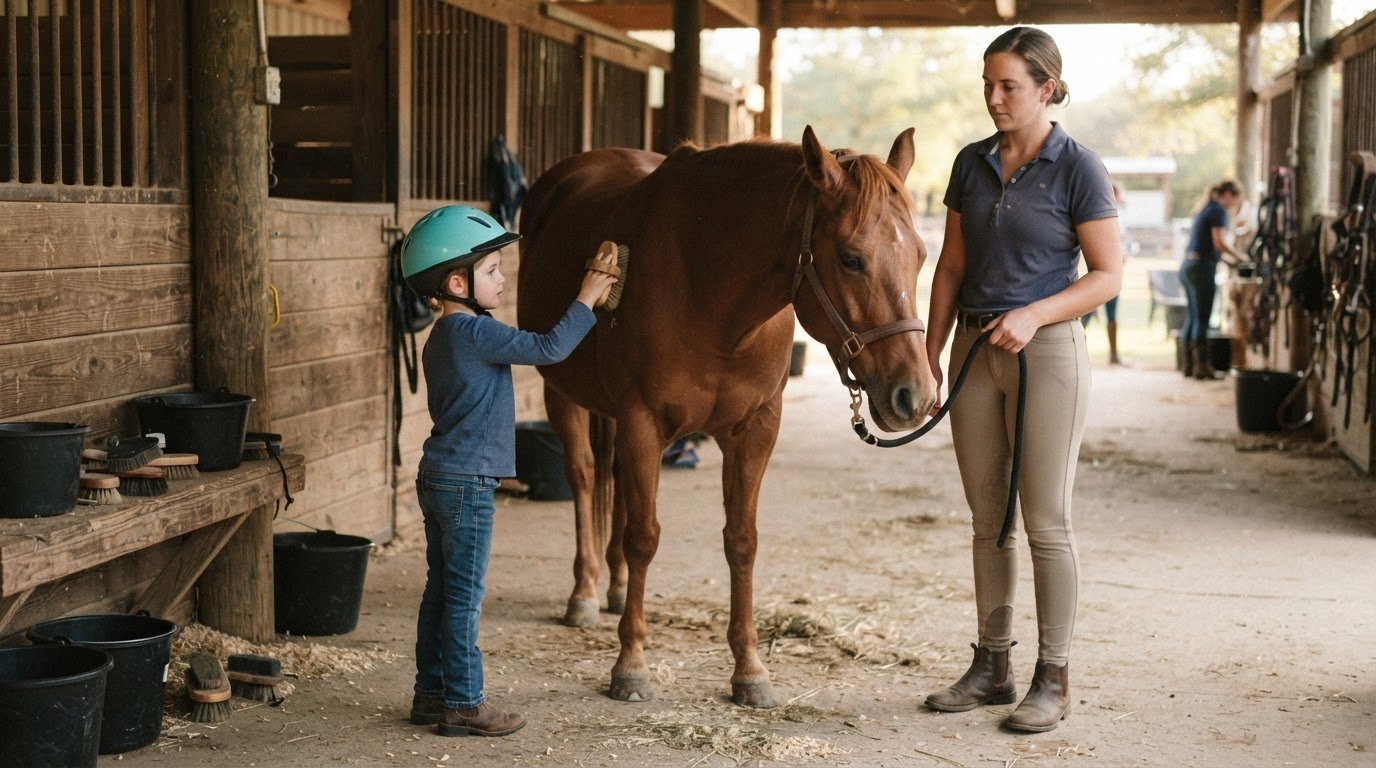
When leading, hold the rope 6-12 inches below the halter clip. Keep excess rope in your other hand, off the ground. If the horse turns, move with it and guide it away from yourself. A steady horse safety for beginners routine also means staying beside the horse, never directly in front or behind. If passing behind, stay close with a hand on its rump, or move well beyond kicking range.
Choose an instructor who teaches groundwork and riding, explains safety procedures, and supervises beginners. Credentials from the Certified Horsemanship Association or United States Equestrian Federation can be useful indicators. Look for an orderly handling area and clear instructions.
In the United States, choose an equestrian helmet bearing the ASTM/SEI mark. This indicates that the helmet meets or exceeds the ASTM equestrian headgear standard.
Many U.S. centers begin lessons at ages 6-8. Health, ability, and weight policies vary with the rider, horse, and facility. Lesson and safety-equipment costs depend on lesson format, duration, and whether gear is included.
Wear fitted clothing that won’t snag, gloves, and heeled riding boots. Your helmet should fit snugly and stay in place as you move; a body protector should fit securely without restricting movement. If a horse frightens, bucks, or bolts, follow your instructor’s directions and don’t pull abruptly. Horse safety for beginners means learning how to respond with guidance, not handling a crisis alone.
2. Arena and trail etiquette
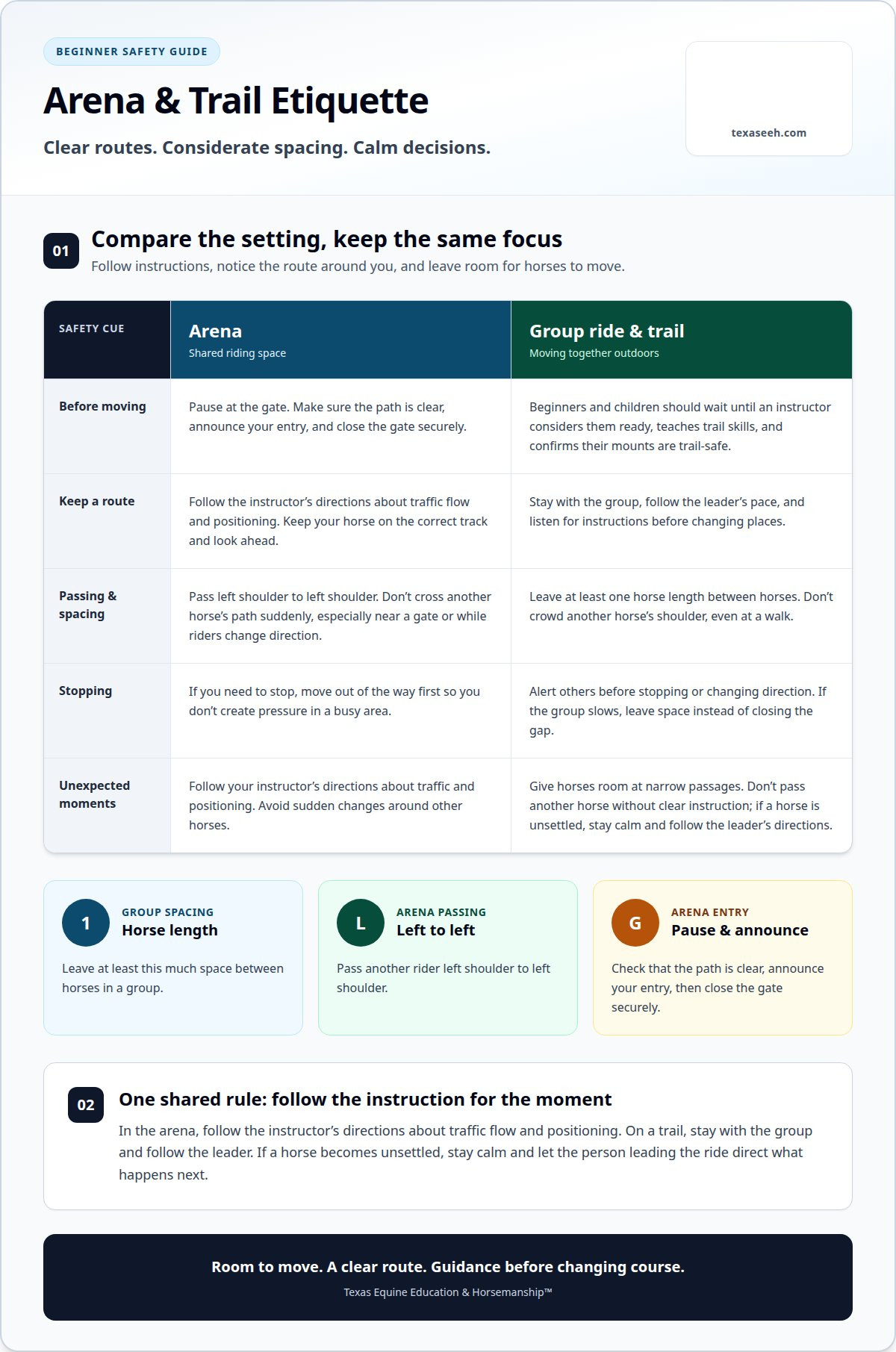
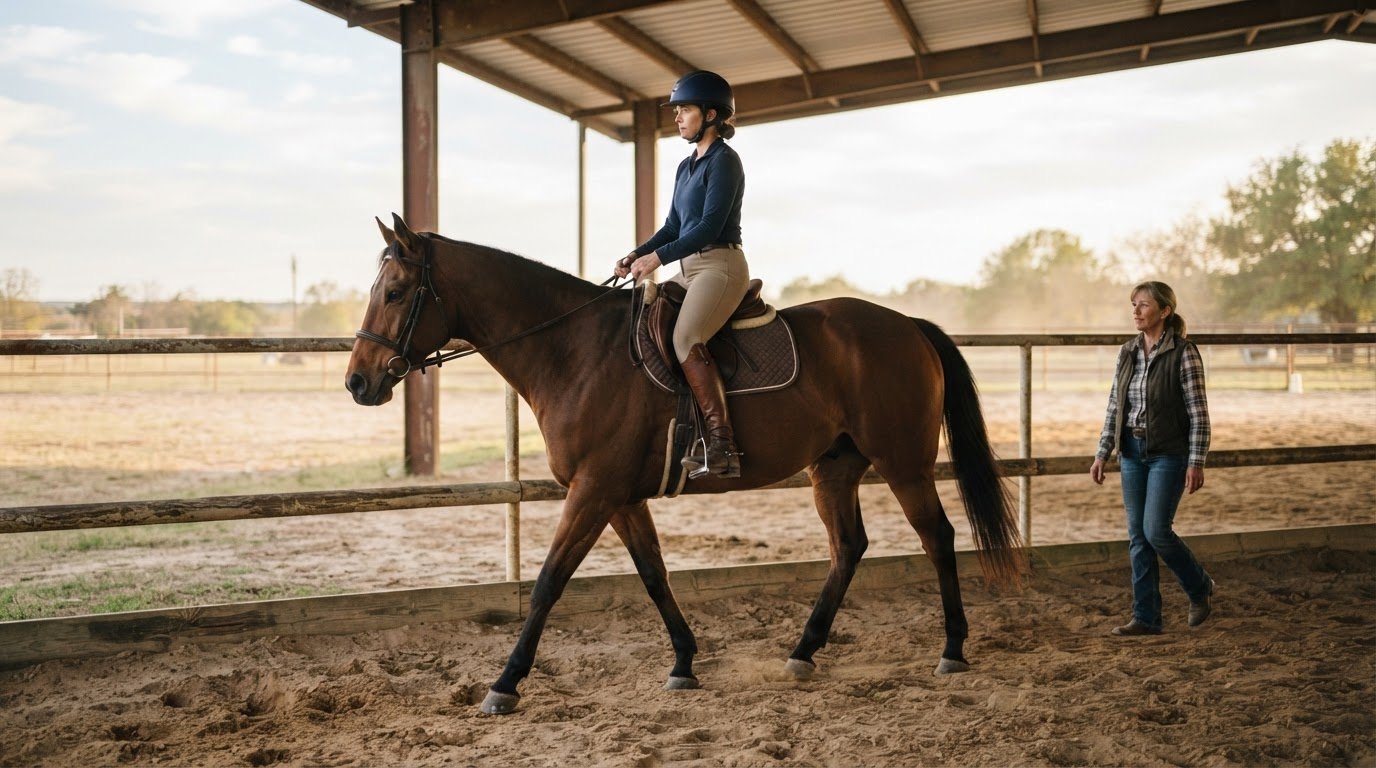
Before entering an arena, pause at the gate and make sure the path is clear. Announce your entry so riders inside can respond, then close the gate securely. Follow your instructor’s directions about traffic flow and positioning. Don’t cross another horse’s path suddenly, particularly near a gate or while riders are changing direction.
When passing another rider in an arena, keep left shoulder to left shoulder. This gives both horses a clear route and reduces close, unexpected encounters. Keep your horse on the correct track for the lesson, and look ahead rather than focusing only on your own position. If you need to stop, move out of the way first to avoid creating pressure in a busy area.
In a group, leave at least one horse length between horses. This space helps reduce the risk of a horse kicking or stepping on the horse behind it. Don’t let your horse crowd another horse’s shoulder, even at a walk. If the group slows, leave space instead of closing the gap. Follow the leader’s pace and listen for instructions before changing places.
Beginners and children should wait to trail ride until a trainer or instructor considers them ready, teaches them trail skills, and confirms their mounts are trail-safe. Stay with the group, and alert others before stopping or changing direction. Give horses space at narrow passages, and don’t pass another horse without clear instruction. If a horse becomes unsettled, stay calm and follow the leader’s directions rather than adding pressure.
3. Handling young, injured, or stallion horses
A young horse may still be learning to lead, stand, and respond to people. Keep sessions quiet, give clear direction, and work with an experienced handler. Avoid standing behind a horse that may move suddenly. Certified riding helmets and body protectors are recommended when handling young, nervous, or unpredictable horses.
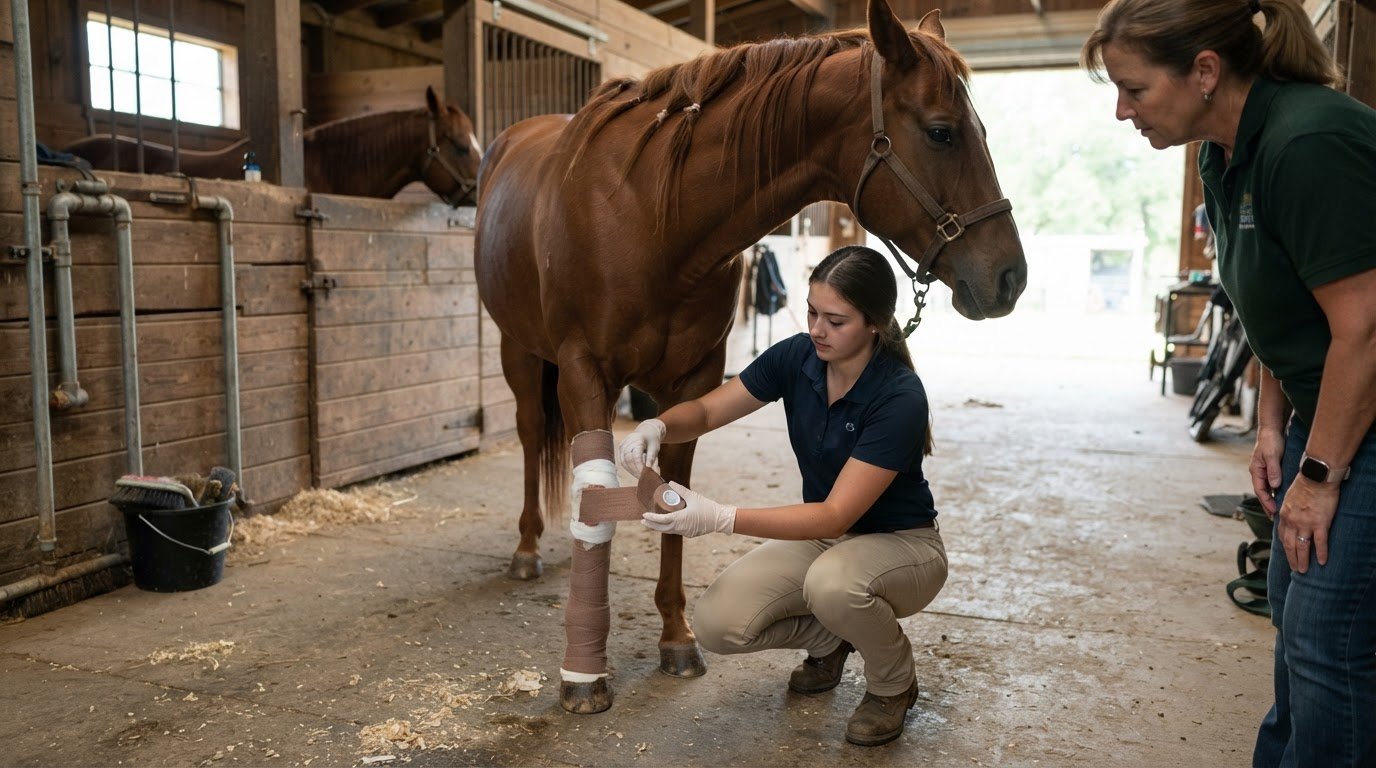
An injured horse may react unexpectedly if movement or touch causes discomfort. Follow the handler’s instructions, approach only when permitted, and don’t reach toward a sore area. Give the horse room to shift its weight, and keep your footing clear of ropes and equipment. If the horse becomes tense, pause and let the experienced handler take the lead.
Stallions need attentive handling and a suitable environment. Stay calm and confident, follow established instructions, and don’t enter or leave an enclosure without the handler’s direction. Keep other horses and people at a safe distance when instructed. Avoid sudden movements or anything that could distract the horse from its handler.
Risks for beginner riders include falling, being stepped on, or being kicked if a horse startles or moves unexpectedly. Reduce risk by wearing a properly fitted helmet and suitable footwear, riding with close instruction, and choosing a horse suited to your experience. When serious equine or recreational accidents do happen, legal resources like mcguireinjurylaw.com offer guidance on Texas personal injury laws and liability.
With any horse, watch its posture and give it room to respond. If a young horse pulls, an injured horse shifts away, or a stallion becomes difficult to control, don’t try to manage the situation alone. Move to a safe position when directed, stay clear of the horse’s path, and let the experienced handler regain control before approaching again.
Texas Equine Education & Horsemanship™: Horse & Rider Showcase
Texas Equine Education & Horsemanship™ offers the Horse & Rider Showcase for those who want to stay connected with horsemanship beyond this safety guide. Beginners looking for guided foundations can take an Introductory Lesson before handling or riding independently. Tiny Tot Lessons introduce young children to horses, while Equine Care Classes cover their everyday needs.
Choose an option that fits your experience and learning goals. Lessons develop practical skills with instruction, while Equine Care Classes focus on knowledge beyond riding. These learning opportunities complement safe handling habits, but don’t replace following an instructor’s directions around horses.
Explore the Horse & Rider Showcase and visit Texas Equine Education & Horsemanship™ online to learn more.
Build confidence through your next learning step
Confidence around horses grows through steady practice and thoughtful guidance. Choose a next step that suits your experience, whether you’re starting to ride or building your understanding of horsemanship. Each new skill can help you make careful choices and respond thoughtfully around horses.
Keep learning at a manageable pace, and give yourself time to build experience. Horse safety for beginners is an ongoing practice shaped by attentiveness, preparation, and respect for each horse. Stay curious, follow sound instruction, and let each experience build your confidence.
Frequently Asked Questions
Ready to Start Your Equestrian Journey Safely?
Start by choosing a lesson that matches your experience and setting a manageable goal, such as becoming comfortable with groundwork. Arrive ready to listen, wear clothing that won’t snag, and tell your instructor about anything that affects your balance or movement. Build practical skills step by step instead of rushing into advanced riding.
How should a beginner safely approach, handle, and lead a horse?
Ask the handler before touching or moving a horse, especially in a shared barn aisle. If you’re allowed to offer carrot or apple pieces, place them on a flattened palm rather than pinching them between your fingers. Don’t feed a horse without permission; its diet or handling routine may be managed for a reason. Keep your attention on the horse as it takes the treat.
What are the basic horse-riding safety rules for beginners?
Before mounting, ask an instructor to check that the tack is secure and fits properly. Check the girth again if it feels loose, since it can loosen as you mount. After sitting, put your right foot into the right stirrup without reaching down by hand. Follow your instructor’s directions, and don’t try a new maneuver without guidance.
What age, health, or weight restrictions do riding stables commonly have for beginners?
Many centers begin lessons at ages 6-8. Health, ability, and weight policies vary by rider, horse, and facility.


Comments