


Effective Horse Parasite Management: A Professional Guide

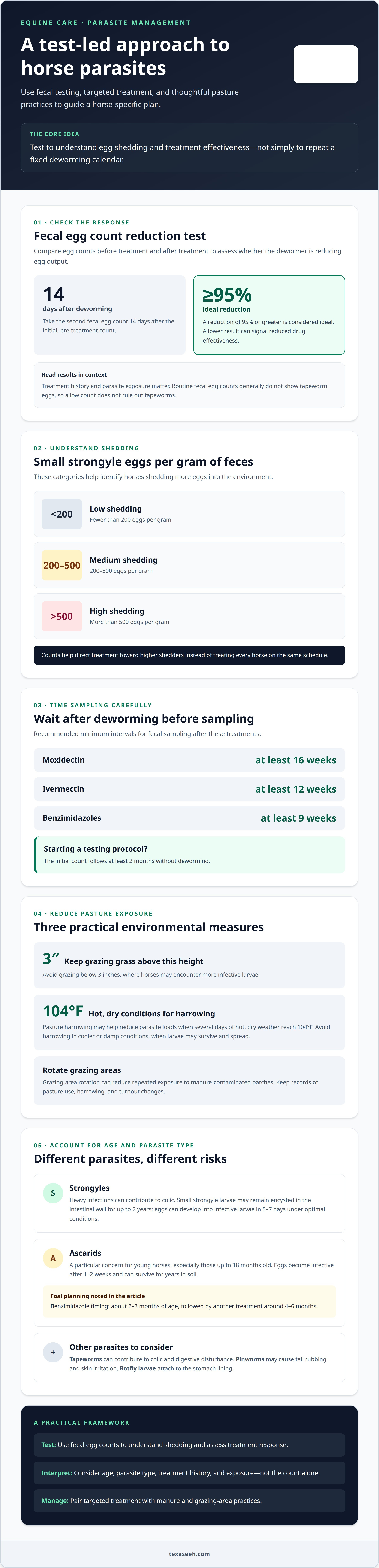
What if the first step in a deworming plan is a manure test, not another dose? Effective horse parasite management starts with understanding how much a horse is shedding and whether treatment is working. A fecal egg count reduction test compares an initial fecal egg count with a second count 14 days after deworming; a reduction of 95% or greater is considered ideal.
Moving from a fixed deworming schedule to testing and targeted treatment can feel like a big change. Fecal egg counts help identify horses that shed more parasite eggs and those that shed fewer, while offering useful information about dewormer effectiveness.
This guide explains how fecal egg count reduction testing can help, which internal parasites commonly affect horses, and how pasture and manure practices may limit exposure. Together, these steps provide a practical foundation for a thoughtful, horse-specific parasite plan.
Table of Contents
What else can be done to reduce parasites in the horse’s environment?
Grazing-area rotation can reduce repeated exposure to manure-contaminated patches. Avoid letting horses graze grass below 3 inches, where they may encounter more infective larvae. Pasture harrowing can help reduce parasite loads when several days of hot, dry weather reach 104°F. Avoid harrowing in cooler or damp conditions, when larvae may survive and spread across the pasture. These choices add practical environmental measures to horse parasite management.
Fecal egg count testing and deworming costs in the United States vary with laboratory and veterinary fees, medication, and each horse’s needs, so there is no single typical cost. Dewormers target different parasites; choose treatment based on the intended target and test findings. The goal is not routine rotation on a fixed calendar, but targeted treatment that considers the horse’s risk and helps limit resistance.
For a new arrival, keep the horse apart from resident horses and pasture while assessing parasite status. Arrange fecal testing and a veterinarian-guided treatment plan before turnout. Foals need age-aware planning because ascarids pose particular risks to young horses. The listed benzimidazole timing is about 2-3 months of age, followed by another treatment around 4-6 months.
Environmental routines work best when they suit the farm’s grazing pattern and manure-handling practices. Keep records of pasture use, harrowing, and changes to turnout areas. This context can help reveal where exposure may occur and where management could improve. Pairing these observations with testing supports horse parasite management without relying on a single measure or an automatic deworming schedule.
Fecal egg count reduction testing
Fecal egg counts estimate the number of parasite eggs in manure and help guide treatment choices. They reveal shedding patterns and can show whether an anthelmintic is reducing egg output.
Shedding Levels and Resistance
Shedding levels describe how many small strongyle eggs a horse passes per gram of feces. Fewer than 200 eggs per gram indicates low shedding; 200-500 indicates medium shedding; more than 500 indicates high shedding. These categories help distinguish horses contributing more eggs to pasture contamination. A fecal egg count reduction test also helps assess whether a dewormer is working against the target parasites.
For the test, compare a fecal egg count before treatment with another count 14 days afterward. A reduction of 95% or greater is considered ideal. A lower reduction can signal reduced drug effectiveness, though test results need interpretation alongside the horse’s treatment history and parasite exposure.
Guiding Treatment with Test Results
Fecal egg counts help direct treatment toward higher shedders instead of treating every horse on the same schedule. They also allow a veterinary professional to track changes over time and consider whether resistance may affect the farm’s deworming plan. Counts do not detect every parasite: tapeworm eggs generally do not appear in routine fecal egg counts, so a low result does not rule out tapeworms.
Sampling time matters. For fecal sampling after moxidectin, the AAEP recommends waiting at least 16 weeks; after ivermectin, at least 12 weeks; and after benzimidazoles, at least 9 weeks. When first establishing a testing protocol, the initial count follows at least 2 months without deworming. Together, timing and paired results make the count reduction test more useful than an isolated number.
Common internal parasites in horses
Strongyles are common internal parasites in horses, and heavy infections can contribute to colic. Small strongyle larvae may remain encysted in the intestinal wall for up to two years. Their eggs can develop into infective larvae in 5-7 days under optimal conditions, making manure and grazing areas important parts of parasite control.
Ascarids affect young horses, especially those up to 18 months old. Heavy infections can cause coughing, poor appetite, a pot-bellied appearance, or intestinal obstruction. Ascarid eggs become infective after one to two weeks and can survive for years in soil. Foals grazing where manure accumulates may therefore encounter persistent contamination.
Tapeworms can contribute to colic and digestive disturbances. Pinworms may cause tail rubbing and skin irritation, while botfly larvae attach to the stomach lining. Because these parasites live in different places and can cause different problems, no single sign or egg count reduction result provides a complete picture of parasite risk.
Signs that may accompany worm infection include reduced appetite, fatigue, diarrhea, or hair loss around the anus from scratching. Heavy worm burdens can also contribute to anemia, ulcers, and weight loss. Contact a veterinarian if these signs appear, especially if they persist or occur with colic, coughing, or difficulty maintaining weight. A veterinary assessment can consider the horse’s age, symptoms, exposure, and testing history together.
The key is to consider parasite type, life stage, and likely exposure together. For example, foals face particular ascarid risks, while strongyle larvae can persist in an adult horse’s intestinal wall. Targeted testing and environmental practices help shape parasite control around these differences.
A useful next step is to keep a simple record of each horse’s parasite plan, including changes in grazing, test results, and treatment decisions. Over time, that record can help reveal patterns and support more thoughtful horse parasite management. If you’re building confidence in everyday equine care, Texas Equine Education & Horsemanship™ offers Equine Care Classes focused on learning about horses and their needs. The right educational foundation can help owners make informed decisions and recognize when a horse’s health needs closer attention. For information about Texas Equine Education & Horsemanship™, contact Texas Equine Education & Horsemanship™. Each careful step helps you create a more informed, consistent approach to your horse’s well-being.
Frequently Asked Questions
How do I get started on the FEC deworming protocol?
Begin by arranging a baseline fecal egg count and recording the horse’s recent deworming history. For an initial count when starting a protocol, the horse should not have been dewormed for at least 2 months. After treatment, collect another sample 14 days later for the reduction test. Keep the horse’s age, pasture exposure, and previous test results together as useful context for interpreting future counts.
When should I give my horse dewormer?
Base treatment timing on test results, parasite risks, age, and the horse’s management, rather than dosing automatically at set intervals. Adult and young horses can face different risks, so their plans may differ. The AAEP recommends one to two dewormer treatments annually for adult horses. A veterinarian can use the horse’s history and test findings to help decide when treatment is appropriate.
What are the common internal and external parasites in horses?
Common internal parasites include strongyles, ascarids, tapeworms, pinworms, and botfly larvae. Horses can also be affected by parasites on the outside of the body. Signs vary: pinworms can prompt tail rubbing, while heavy internal worm burdens may contribute to weight loss or digestive problems. Parasite type and symptoms help guide assessment because routine fecal egg counts do not reveal every parasite.
How often should horses be dewormed, and what is a targeted deworming schedule?
There is no single deworming schedule for every horse. The AAEP recommends one to two dewormer treatments annually for adult horses; targeted plans also use fecal counts and the horse’s age, exposure, and shedding pattern to guide decisions. Avoid relying on automatic calendar rotation. Keeping records of treatments and test results helps show whether the approach needs adjustment over time.
How can pasture management and manure removal reduce horse parasites?
Reducing manure in grazing areas limits opportunities for parasite eggs to develop and be ingested. Remove droppings from stalls and turnout areas regularly, and avoid spreading untreated manure where horses graze. Mowing helps maintain pasture growth, while rotating grazing areas can reduce repeated exposure. These practices support parasite control alongside testing and treatment, rather than replacing either part of a horse’s care plan.





Comments