


Ground Work Horse Training Classes: A Guide to Building Foundation and Trust

What if the most important moments with your horse don't happen in the saddle, but while your feet are firmly planted on the soil? Many equestrians view ground work horse training classes as a tool reserved only for correcting difficult behaviors or starting young colts. However, the ground is actually a peaceful laboratory where you learn the subtle language of equine psychology. It's natural to feel a sense of worry when a horse crowds your space or seems to ignore your cues during grooming. You aren't alone in that frustration; it's often just a sign that your communication needs a more stable and supportive foundation.
This guide helps you discover how specialized classes transform the way you and your horse interact, moving from a place of uncertainty to one of mutual respect. You'll learn how to choose a program that prioritizes safety and emotional well-being while building your confidence in every situation. We'll explore how to interpret horse body language and use gentle, clear signals to foster a deeper bond. By understanding the purpose behind every movement, you can create a partnership that feels like a quiet, intentional conversation rather than a struggle for control.
Table of Contents
Understanding Ground Work Horse Training Classes: Why Education Starts Before the Saddle
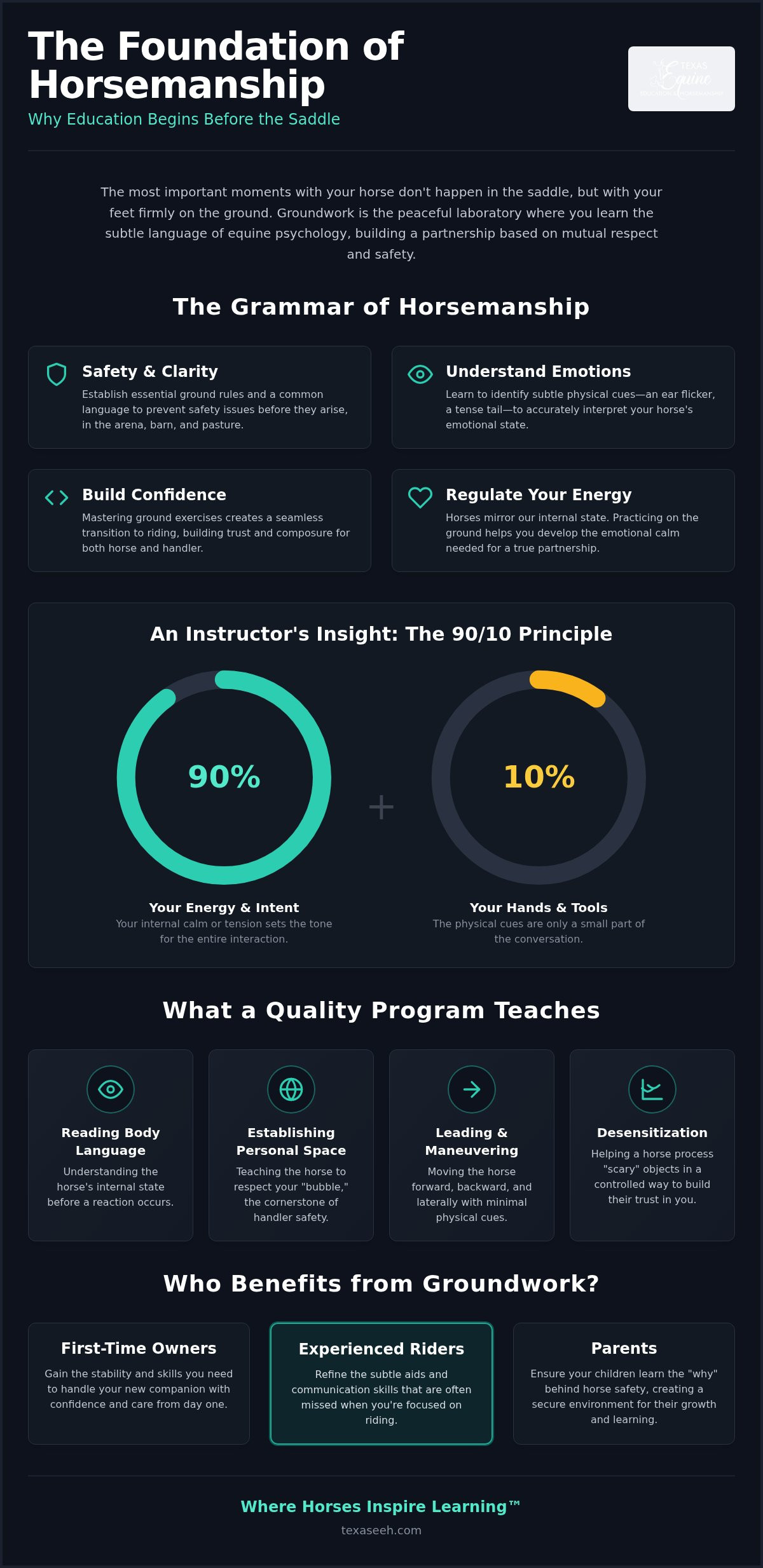
Groundwork isn't a secondary activity or a temporary fix for a misbehaving animal. Instead, ground work horse training classes provide a structured environment where you learn to communicate through clarity and consistency before you ever step into a stirrup. Think of these classes as the grammar of horsemanship. Just as you must understand the rules of a language to write a book, you must understand the nuances of equine movement to build a successful partnership. These classes focus on the mental and physical connection that keeps both parties safe.
Many people believe these sessions are only for horses that are "broken" or dangerous. This is a common misunderstanding. In reality, every horse and handler benefits from a clear set of ground rules. When you establish these boundaries early, you prevent safety issues before they ever arise. It's about building a common language that works in the arena, the barn, and the pasture.
Horse Talk: Essential Terms
Pressure and Release: The fundamental way horses learn. We apply a gentle cue (pressure) and immediately stop it (release) the moment the horse responds correctly. This release is the "thank you" that teaches the horse they've found the right answer.
Flight Zone: The personal space around a horse. Understanding this area helps you know how close you can stand before a horse feels the need to move away.
The Developmental Benefits of Ground-Based Learning
Learning on the ground allows you to focus on your own emotional regulation. Horses are incredibly sensitive to our internal state. If you feel anxious, they feel it too. By practicing cues while standing safely on the dirt, you gain the composure needed for more complex tasks. These skills translate directly to daily life, making grooming, tacking, and even trailering a peaceful experience for everyone involved. Groundwork is the essential foundation for mutual respect and safety between a horse and a human handler.
Who Should Attend Groundwork Classes?
These educational programs are designed for a wide range of students who value a thoughtful approach to learning.
First-time owners: Gain the stability you need to handle your new companion with confidence and care.
Experienced riders: Use ground work horse training classes to refine subtle aids that are often missed when you're focused on riding.
Parents: Ensure your children learn the "why" behind horse safety, creating a secure environment for their growth.
You can explore our foundational
to see how these ground-based skills are integrated into every level of our curriculum.
The Core Curriculum: What Every Foundational Groundwork Class Should Teach
A quality educational program provides more than just a list of exercises. Instead, effective ground work horse training classes focus on the psychological connection between you and your horse. This curriculum serves as a roadmap for developing a partner that is both attentive and relaxed. By focusing on the "why" behind each movement, you build a relationship based on mutual understanding rather than simple obedience.
Reading Equine Body Language: Identifying subtle ear flickers, tail tension, or the softening of an eye helps you understand your horse's internal state before a reaction occurs.
Establishing Personal Space: Teaching the horse to respect your "bubble" ensures physical boundaries are maintained, which is the cornerstone of handler safety.
Leading and Maneuvering: Moving the horse forward, backward, and laterally with minimal physical cues demonstrates that the horse is listening to your intent.
Desensitization and Confidence Building: Helping a horse process "scary" objects like tarps or flags in a controlled way builds their trust in your leadership.
At Texas Equine, we often remind our students of a simple truth: groundwork is 10% what you do with your hands and 90% what you do with your energy. Your horse mirrors your internal calm or tension, making your own emotional regulation a vital part of the curriculum.
Mastering the Language of Pressure and Release
Pressure is simply a request for movement or attention. The real teaching happens during the release. A common beginner mistake is forgetting to release the pressure the instant the horse tries to find the right answer. By letting go immediately, you confirm the horse's choice was correct. This clarity on the ground translates directly to under-saddle communication, making your future riding aids feel light and intuitive.
Safety Standards and Professional Handling
Safety is a practice of awareness. Proper lead rope management is vital; you should never loop the rope around your hand to avoid the risk of entanglement. Always maintain a clear exit path when working in confined spaces like stalls or narrow alleys. Wearing appropriate footwear, such as sturdy leather boots, protects you from accidental steps. These habits ensure a secure environment where learning can thrive. If you're ready to see these skills in action, our Horse & Rider Showcase provides a wonderful opportunity to observe the results of ground work horse training classes in a supportive community setting.
How to Evaluate and Choose the Right Groundwork Training Program
Selecting the right environment for your education is a deeply personal decision. Effective ground work horse training classes should feel like a sanctuary for both you and your horse. When you evaluate a program, look for an instructor who prioritizes the "why" behind every movement. If a trainer focuses only on mechanical repetition without explaining the equine psychology involved, the connection remains surface-level. A quality program follows a logical progression, starting with essential safety and moving toward advanced liberty work as your partnership matures. For those training on their own land, maintaining that secure environment includes managing property infrastructure with professional services like Texas Septic Solutions to keep the facility safe and functional.
It's also helpful to look for professional development pathways if you wish to deepen your commitment to the equine field. Programs like the Equine Industry Readiness Program™ offer structured 8-week internship segments that provide a comprehensive look into the industry. This level of intentionality shows that the organization values long-term growth and stable foundations rather than quick fixes.
Virtual vs. In-Person Groundwork Education
Digital learning has opened doors for equestrians who don't have local access to specialized instructors. Virtual Education sessions, held every Thursday, serve as an excellent low-barrier entry point for national students. These sessions allow you to absorb the theory and science of horsemanship from the comfort of home. However, in-person coaching remains non-negotiable for safety-critical skills where an instructor needs to see your timing and energy in real-time. Using online resources to supplement your physical practice between ground work horse training classes creates a well-rounded and steady learning rhythm.
Instructor Insight: Red Flags to Avoid
A nurturing environment shouldn't rely on fear, intimidation, or excessive force. If you observe a program that uses these methods, it's a significant red flag. Horses don't learn their best when they're simply trying to avoid pain; they learn through trust and clear communication. Be wary of "one-size-fits-all" methods that ignore the unique personality and history of your horse. A knowledgeable educator will always explain the science of how horses learn, adapting their approach to meet the individual needs of each animal.
If you're ready to begin this step-by-step process in a supportive setting, we invite you to explore our foundational Horsemanship Lessons to find the right fit for your goals.
Practical Application: Transitioning Skills from the Ground to the Saddle
The transition from standing on the soil to sitting in the saddle should feel like a natural extension of a conversation you've already started. Many riders view these as separate activities, but ground work horse training classes actually provide the blueprint for every movement you'll eventually ask for while riding. When you teach a horse to move laterally on the ground, you're laying the foundation for a leg yield. The horse learns to yield its ribcage and cross its legs in response to your energy and a light touch, making the transition to under-saddle aids much smoother and more intuitive.
Similarly, practicing ground-based "stops" ensures your horse is responsive to the halt before you ever mount. This builds a partnership mindset where the horse is already looking to you for guidance. We encourage our students to participate in the Horse & Rider Showcase™ to celebrate this progress. It's a wonderful way to demonstrate how the stability you've built on the ground translates into a confident, balanced performance in the arena.
Consistent Communication Across All Mediums
Using the same cues on the ground and in the saddle prevents equine confusion and fosters a sense of security. Voice commands and body position are universal tools that work regardless of where you're standing. If you use a specific word for "whoa" or a certain body tilt to suggest a turn on the ground, your horse will recognize those same signals when you're riding. Your horse doesn't distinguish between "ground time" and "riding time"; to them, every interaction is a moment of education and connection.
Next Steps in Your Horsemanship Journey
Integrating these skills into your daily routine doesn't require hours of extra work. You can easily add 15 minutes of groundwork to the beginning of every riding session to check your horse's focus and relaxation. As you become more comfortable, you might explore specialized skills like long-reining or liberty work to further refine your communication. Continuing your education through structured ground work horse training classes or our foundational Horsemanship Lessons ensures that your progress remains steady and supportive. This step-by-step approach builds the lasting trust that every equestrian desires.
Building Your Partnership from the Ground Up
A stable relationship with your horse begins with a commitment to understanding their natural language. By viewing ground work horse training classes as a sanctuary for learning, you replace frustration with clarity and mutual respect. You've discovered how reading subtle body language and mastering the art of pressure and release creates a reliable foundation. These skills aren't just for the arena; they ensure every moment, from grooming to tacking, is safe and peaceful for both you and your horse.
Whether you join our weekly Virtual Education sessions from home or seek professional growth through the Equine Industry Readiness Program™, the focus remains on the "why" behind every skill. Our nurturing, family-friendly environment provides the tranquility needed for true developmental progress. Every step you take on the ground builds the self-assurance you need to succeed in the saddle and beyond. We invite you to explore additional educational resources and foundational classes to continue this rewarding process. Your journey toward a deeper equine bond is a step-by-step endeavor, and we're here to support you at every turn.
Frequently Asked Questions
Is groundwork necessary if my horse already rides well?
Groundwork remains essential because it addresses the many hours you spend with your horse outside of the saddle. Even if a horse is responsive while being ridden, ground work horse training classes help refine subtle cues that improve grooming, tacking, and trailering. This foundational work ensures that your partnership is based on mutual respect in every environment, rather than just relying on riding equipment for control.
Can I learn groundwork through online or virtual classes?
You can absolutely begin your education through virtual sessions. Our Virtual Education classes held every Thursday provide a low-barrier entry point for students to learn the theory behind equine behavior. While hands-on coaching is vital for safety-critical skills, online resources help you absorb the psychological principles of horsemanship at your own pace. This prepares you to be a more intentional handler when you're physically with your horse.
What equipment do I need for a basic groundwork class?
For a foundational class, you typically only need a well-fitted halter and a sturdy lead rope, usually 10 to 12 feet long. Personal safety gear is equally important; you should wear closed-toe leather boots and comfortable clothing. Some advanced ground work horse training classes might introduce tools like training sticks or flags for desensitization, but a simple lead line is the starting point for building a clear and stable connection.
How long does it take to see results from groundwork training?
You'll often see a shift in your horse's focus and relaxation during your very first session. However, building a deep psychological bond is a step-by-step endeavor that requires consistency over several weeks. Most handlers report feeling significantly more confident in their handling skills after four to six weeks of regular, intentional practice. Progress is a methodical process that rewards patience and a steady, unhurried approach to learning.
Are groundwork classes safe for children and beginners?
These classes are highly recommended for children and beginners because they establish safety boundaries before anyone ever mounts. Our Tiny Tot Lessons and foundational programs focus on teaching young handlers to respect a horse's personal space and read body language. This ground-based approach builds self-assurance and emotional regulation in a controlled, nurturing environment. It's often the most inclusive and safest way to introduce new equestrians to the field.
What is the difference between natural horsemanship and traditional groundwork?
Traditional groundwork often focuses on physical maneuvers and lunging for exercise. Natural horsemanship prioritizes equine psychology and the "why" behind a horse's reactions. While both use ground-based exercises, the natural approach focuses on building a partnership through pressure and release. This method aims for a horse that chooses to cooperate because they understand the request, leading to a deeper bond and a more versatile, willing partner.


Comments